Allegiance to the King of Kings
Are You Ready? Part 7
 Having set out the table of end-time events in Matthew 24, Jesus goes on to illustrate in very practical terms how we should prepare ourselves for these days.
In the last instalment we considered the parable of the ten virgins (verses 1-13). This time we look at the parable of the talents (Matt 14-30; Luke 19:11-27) and begin to consider the whole subject of our wealth and finances.
Parable of the Talents
Both above parables speak of a man who is going away and entrusts all his property to his servants. The Luke passage clearly identifies him as a king who, only on reaching his destination, will be enthroned as such. The journey the man makes is another veiled reference to the bridegroom who has gone away for an unspecified time, but whose return is guaranteed at some point. It was a significant matter of trust for a king or a man of wealth and position to entrust his property to servants.
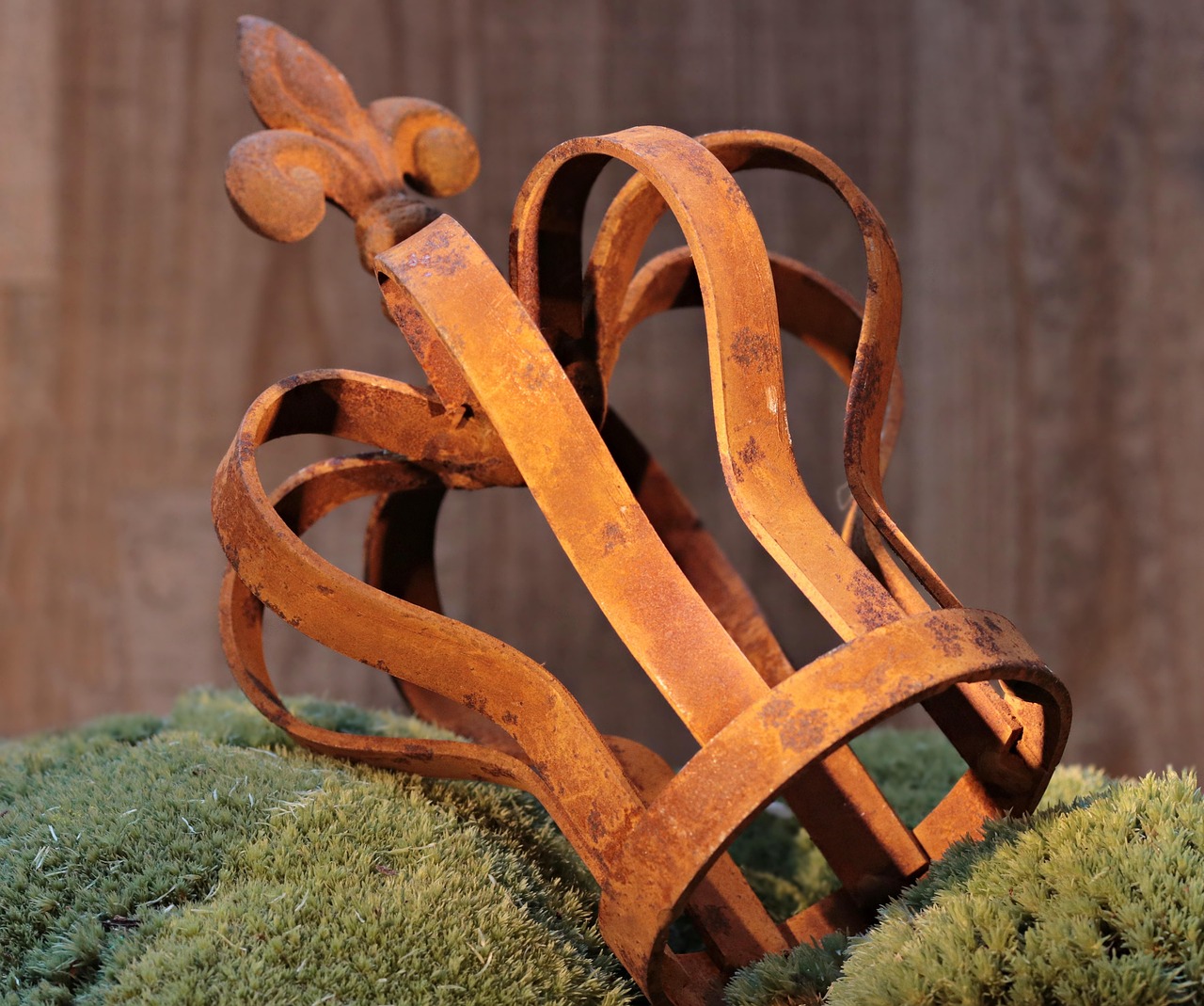
The talent was an ancient unit for measuring value in Greece, Rome and the Middle East, rather like our former ‘gold standard.’ In the Old Testament, a talent was a unit of measurement for weighing precious metals, usually gold and silver. It was the heaviest unit of measurement for weight, equal to about 75lbs or 35kg. Imagine for just one moment how heavy David’s crown was:
"David took the crown from their king's head, and it was placed on his own head. It weighed a talent of gold, and it was set with precious stones." (2 Sam 12:30).
The construction of the Tabernacle identifies the talent as being gold.
Jesus is talking about money and wealth, not simply our natural or supernatural gifts and abilities
"All the gold that was used for the work, in all the construction of the sanctuary, the gold from the offering, was twenty-nine talents ..." (Ex 38:24).
By New Testament times, a talent was a large monetary measurement roughly equal to 6,000 drachmas. One talent equalled about 60 minas or 3,000 shekels. A mina was a much smaller coinage, weighing approximately 1.25lbs or 0·6kg; a shekel weighed about 0·4 ounces or just 11 grams. In New Testament times, a shekel was a silver coin weighing one shekel. The mina equalled about 50 shekels.1
So, there is no getting away from it, whether we are reading the parable of the talents or the minas, Jesus is talking about money and wealth, not simply our natural or supernatural gifts and abilities, what we might call our talents. Having said that, in the parable of the talents, there does seem to be a correlation with the abilities of the individual to do something with that which has been entrusted to them:
“…to one he gave five talents, and to another two, and to another one, to each according to his ability. Then he went on his journey.” (Matt 25:15).
The Greek word translated here ‘ability’ – dunamis (Strongs G1411) – means energy, physical power, which, by implication, can even be a miracle itself. From this we can deduce that Jesus is implying that the master or king had deliberately chosen to entrust his wealth into the hands of servants who, in his estimation, had the ability to put it to work with the expectation it would increase.
“Put this money to work,” he said, “until I come back.” (Luke 19:13).
He expects us to do something with whatever He has entrusted to us – not to simply enjoy it for ourselves.
If we do a comparison of the outcomes for the wealth distribution in the two parables, this is what we see:
Talents of Gold |
Multiplication |
Reward |
|
5 |
X 2 = 10 + 1 = 11 |
Put in charge of many things. |
|
2 |
X 2 = 4 |
Put in charge of many things. |
|
1 |
X 0 = 1 |
Bank interest would have literally given ‘offspring’.2
Stripped of everything. One talent given to the one with 10.
Thrown into outer darkness. |
|
Minas of Silver |
Multiplication |
|
|
1 |
X 10 = 10 + 1 = 11 |
Charge of 10 cities |
|
1 |
X 5 = 5 |
Charge of 5 cities |
|
1 |
X 0 = 1 |
Bank interest would have literally given ‘offspring’.
Stripped of everything. One talent given to the one with 10. |
Whether this outcome sits easily with our 21st century ideas of fairness and equality or not, Jesus is clearly teaching a very hard lesson: He expects us to do something with whatever He has entrusted to us – not to simply enjoy it for ourselves – but to put it to work to reap a harvest of some sort for the greater good of others and the extension of His kingdom in these end times.
‘But his subjects hated him and sent a delegation after him to say, “We don’t want this man to be our king.”’ (Luke 19:14).
This verse shows us something deeply significant about the hearts of some of the king’s subjects. They simply did not want to allow Him to be their king. They were not willing to serve anyone other than themselves, and their judgement was swift and harsh (Luke 19:27).
In each parable, the man who received one talent or mina seems to have acted out of real fear, resulting in his failing to do anything at all with what was entrusted to him.
Jesus is making the point that He expects us to unreservedly put our money and resources to work for the kingdom so that it produces ‘offspring’ of some kind – a multiplication.
‘Then the man who had received one bag of gold came. “Master,” he said, “I knew that you are a hard man, harvesting where you have not sown and gathering where you have not scattered seed. So I was afraid and went out and hid your gold in the ground. See, here is what belongs to you.”’ (Matt 25:24-25 see also Luke 19:20).
Again, there is a swift judgement given by the master or king.
Jesus is making the point that He expects us to unreservedly put our money and resources to work for the kingdom so that it produces ‘offspring’ of some kind – a multiplication. We are not to allow the fear of man, looking stupid or feeling inferior to others, the fear of Satan, persecution or even death to prevent us from putting ourselves, our money, wealth, property and the varying abilities given to each of us to multiply the original ‘seed’ entrusted to us.
Jesus Our King?
To be the people God means and needs us to be, God’s kingdom must first be formed in us. We must allow Him to be king. A seed takes many years to grow into a fruit-bearing tree. It’s the same principle with God’s kingdom in us. It is a process, so we need to be patient with ourselves. Right from the cradle we have learned by an in-built default to look out for number one, so it takes time to put our own desires, wants and ingrained behavioural patterns to the back of the queue, to learn to walk by faith with Father God, and attend to what pleases His heart more than our own.
Queen Elizabeth II was Head of State of the British Isles and the Commonwealth, boss of the ‘firm’. But she was also a wife, mother, grandmother and great-grandmother who loved dogs and horses and had, apparently, a great sense of humour. Various people had connections with her in each of these distinct roles but there was one over-riding factor: no-one ever forgot she was Queen. Even closest family members on encountering her for the first time that day had to address her as ‘your Majesty’ and bow or curtsey; only at subsequent meetings could they be more informal. In fact, all those involved in palace life, from the humblest to the greatest, were her servants. Everything revolved around what pleased her.
It is the same in our relationship with God: we are His children and bride; we may know Him intimately as the lover of our soul and as a Father who has generously blessed us and made us heirs with Jesus of a great many spiritual blessings and freedoms. But that closeness does not permit us to live life any way we wish; even in the intimacy of a child-parent, lover-bridegroom relationship, we must never forget to honour and reverence God as our king.
If even Jesus was described as His servant, then how much more should we determine to learn how to live our lives to please our king, or Lord, and do His will?
‘Here is my servant whom I have chosen, the one I love, in whom I delight; I will put my Spirit on him, and he will proclaim justice to the nations.’ (Matt 12:18).
If even Jesus was described as His servant, then how much more should we determine to learn how to live our lives to please our king, or Lord, and do His will? The Greek word ‘Lord’ – kurios – literally means our owner.
‘I have been crucified with Christ and I no longer live, but Christ lives in me.’ (Gal 2:20).
‘Do you not know that your bodies are temples of the Holy Spirit, who is in you, whom you have received from God? You are not your own; you were bought at a price…’ (1 Cor 6:19-20).
We are not our own, we have been bought with a price. Jesus’ death was the price God paid to bring us out of slavery to sin and to call us to Himself as His people.
In Greek there are seven different words for ‘servant’. Whenever the term carries the sense of being formally bound to another, the word used is doulos, which is commonly translated as ‘bond slave.’ A bond slave could be a slave who, having been set free, then chooses of his or her own freewill to remain living as a servant to his or her master.
‘For the one who was a slave when called to faith in the Lord is the Lord’s freed person; similarly, the one who was free when called is Christ’s slave. You were bought at a price…’ (1 Cor 7:22-23).
‘You have been set free from sin and have become slaves to righteousness.’ (Rom 6:18).
Father’s costly love demands our costly response.
‘Love the Lord your God with all your heart and with all your soul and with all your strength.’ (Deut 6:5).
Father’s costly love demands our costly response.
Think: What might this verse mean for you and your life; your priorities, values, resources and time?
In the legends of King Arthur and the Knights of the Round Table, each of the knights swore allegiance to the king. Although each one had his own individual ‘quest’ or ‘assignment,’ their oath of allegiance to put the king first always took priority over personal matters. We find a similar heart-allegiance in 1 Chronicles 12:38: the fighting men gathered at Hebron’… determined to make David king’. To be determined is to be ‘single-minded’, ‘unwavering’ and ‘resolute’, which means the business of making David king took top priority over everything else, whether personal ambition, family responsibilities or comfort.
In the present day, God is looking for us to be the embodiment of a servant-hearted people who will determine to make Him king; those who will allow Him to reign in them and over them by making His kingdom – His will, His ways, His purposes, His values and priorities – first over every aspect of our life. It is very easy for us to make a heart-led emotional response to a deeper commitment to Father God; it is not so easy to follow it through until we are the type of singular-minded transparent vessels for the kingdom that Jesus was.
Obedience
‘Blessed rather are those who hear the word of God and obey it.’ (Luke 11:28).
The key to true life in the kingdom of God is our obedience. Gentile Greek-thinking places heavy emphasis on the intellectual understanding of arguments and concepts. On the contrary, Hebraic thought is always practical. If we say we love God, we must go further than just understanding it in our mind; our lives must show it. It is that simple.
The rabbis taught that the depth of our love for God is measured by how much love we give to our neighbour. This is most likely why Jesus linked Deuteronomy 6:5 with Leviticus 19:18 in His summary (Mark 12:30-31) of all Torah (the Law). If we love God and His word but fail to love our neighbour then, in Hebraic terms, our life is a sham; we are not only showing ourselves to be double-minded and liars, we are also misrepresenting God to those who ‘read’ our lives daily.
If we say we love God, we must go further than just understanding it in our mind; our lives must show it. It is that simple.
“Then he said to them all: ‘Whoever wants to be my disciple must deny themselves and take up their cross daily and follow me. For whoever wants to save their life will lose it, but whoever loses their life for me will save it.”’ (Luke 9:23-24)
Once again, Jesus is emphasising that we are to allow Him to take first priority over every aspect of our lives. This comes back to where our heart-allegiance really lies. Self-denial is an unpopular concept in our self-obsessed, self-pleasing world. The other aspects of Jesus’ minimalist lifestyle, such as His widespread rejection, persecution, betrayal, and death, do not readily appeal to our twenty-first century self-preservation instincts either. We do not like the thought of too much of what we have spent our life-time learning, achieving, or striving to possess being dealt that kind of fatal death blow. Ouch!
As we move further into the season of the end-times, as His servants to whom much has been entrusted, God is looking for our complete allegiance and obedience. Thankfully, He knows we are incapable of bringing every aspect of our lives under His control immediately; it is an ongoing process. But confession of sin is not enough. For God to truly reign and rule as king, our lives need to bring forth the fruit of repentance: our returning to Him with all our heart, soul and strength, and that means putting everything we have, are and own on the altar before Him. Only when we do this sincerely and wholeheartedly, with hearts surrendered and willing to obey, will we see the type of kingdom multiplication of our resources described in the parables of the talents and minas.
Think: What do you think this might mean for your life? Ask the Lord to show you just one area in your life where you may be being ‘double-minded.’ Confess your sin to God and identify what type of action you need to take to truly work out your repentance in that area. Ask God to help and strengthen you in your resolve to surrender that area to Him, allowing Him to be king.
None of it is Ours
‘Yours, Lord, is the greatness and the power and the glory and the majesty and the splendour, for everything in heaven and earth is yours. Yours, Lord, is the kingdom; you are exalted as head over all. Wealth and honour come from you; you are the ruler of all things. In your hands are strength and power to exalt and give strength to all.’ (1 Chron 29:11-12).
Nothing can be presumed; we have no rights to anything; everything we have is a blessing bestowed on us by God.
We might think we are the owner of a certain property, bank account, pension fund, car, field or allotment; or we might entertain a modest pride in our achievements — perhaps with our musical or artistic gifts or farming knowledge or joinery skills. But there are no exceptions, and no distinctions can be made: everything we possess is a gift from Him. He is The Source. Nothing can be presumed; we have no rights to anything; everything we have is a blessing bestowed on us by God.
It was stated previously that the Greek word, kurios (lord) literally means ‘owner.’ So, as believers, we are not the owners of anything. Everything we are and all that we have continues to belong to Him; we are just the temporary stewards or servants entrusted with the responsibility of these things. This means we need to learn how to hold these things lightly.
In the parable of the talents, Jesus is clearly outlining that we are not only responsible for what He has given us, but also accountable to Him for what we do with the things we have temporary stewardship of. This perspective emphasises how much we each carry a serious responsibility to put to work all that we have and all that we are (naturally, physically and spiritually) in a way that honours God and fulfils His plans and purposes, not just for ourselves and our families, but for His kingdom today.
It is not sufficient to have learned how to listen to the promptings of the Holy Spirit; we need to actively implement and obey His instructions.
Think: How does what is written in this section apply to you? Are you being challenged to surrender the hold you have on your personal resources and place them completely at God’s disposal whilst you still have control of them? What might this mean for you practically?
To be continued…
Endnote
1. Fairchild, Mary. "
How Heavy Was a Talent in the Bible?" Learn Religions, Jul. 19, 2024, learnreligions.com/what-is-a-talent-700699.
2. https://greekbible.com/matthew/25/27.
Sarah Winbow, 18/02/2026