The Ash Heap of Tears: Britain’s Abandoned Daughters
The need for true justice for the 100,000+ victims of British rape gangs
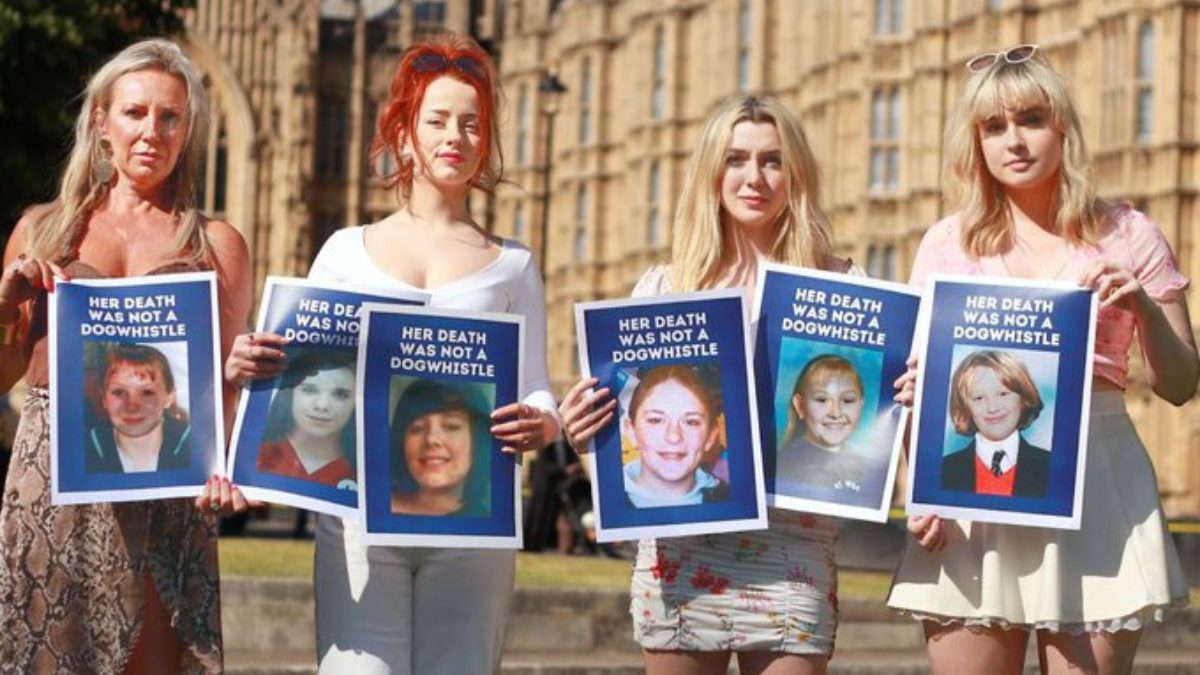 "If you look at the figures coming out of Rotherham, there are 1,400 victims that are known of, from over a decade ago. Multiply that at least tenfold. The last thing that we want to do is for people to stop listening to this because of hyperbole and exaggeration, but if you were to take a very conservative estimate, you’re looking at several towns and cities where girls are being abused and targeted by a very similar type of perpetrator. The real number will be well over 100,000 – and that’s a conservative estimate. That is a terrifying number of victims, the vast majority of whom will never see justice. Almost none of them will have counselling or any kind of psychological support. We’re talking about thousands of ruined lives. It is an extraordinary stain on our nation and on the wellbeing of working-class communities".1
There are moments in a nation’s life when the ground itself seems to testify. When the stones cry out, as Christ warned they would. When what has been buried in reports, footnotes, and institutional evasions rises into the light, not as mere political controversy, but as a moral summons. Such a summons has arisen in the story of Britain’s raped and abandoned daughters. It is not merely a story of crime. It is a story of power. It is a story of silence. And it is a story of the terrible temptation, always present in fallen institutions, to preserve reputation rather than protect the vulnerable. Above all, a story the Church must not avert its eyes from.
The Prophetic Obligation to See What Others Refuse to See
Scripture speaks with terrifying clarity about the responsibility of watchmen. In Ezekiel 33, God declares that if the watchman sees the sword coming and does not blow the trumpet, the blood of the people will be required at his hand. This warning does not apply only to priests or prophets in ancient Israel. It applies to all who hold authority: governments, councils, parties, police forces, and yes, even churches. For authority is not given for self-protection. It is given for protection of the weak. Christ Himself defined judgment in these terms: “Whatever you did not do for one of the least of these, you did not do for me” (Matthew 25:45).
When a child is abandoned, Christ is abandoned.
When a child is abandoned, Christ is abandoned. When a child is silenced, Christ is silenced. When a child is sacrificed to preserve institutional comfort, Christ is sacrificed anew.
What Happened in the Shadows of English Towns
The facts that have emerged from places like Rotherham, Rochdale, and Telford are not rumours or partisan inventions. They have been documented in official inquiries, criminal prosecutions, and survivor testimonies. In Rotherham alone, an independent inquiry led by Alexis Jay concluded, in 2014, that approximately 1,400 children were sexually exploited over a period of years. These were not abstract numbers.
They were girls. Many were between 11 and 16 years old. Many were in care. Many were from broken homes. Many were poor. Many were ignored. They were groomed, trafficked, raped, beaten, threatened, and psychologically destroyed. They were subjected to unspeakable evil.
And over and over again, when they went to authorities, they were not believed. Some were treated as if they were the problem. Some had their abuse labelled as “consensual”, despite being children. Some were arrested while their abusers walked free. Some were returned to the very environments where they would be abused again. This was not merely criminal evil. It was institutional failure.
The Machinery of Evasion
It is now widely acknowledged that multiple institutions failed these children: police forces, social services, councils, prosecutors, and political leaders. The question that continues to haunt the nation is not whether failures occurred. That is established. The question is why. Why were warning signs ignored? Why were patterns not confronted sooner? Why were victims dismissed? Why did protection of institutional reputation appear, at times, to outweigh protection of vulnerable children? The answer, like most human sin, was not simple.
Why did protection of institutional reputation appear, at times, to outweigh protection of vulnerable children?
It was a convergence of fears. Fear of being wrong. Fear of being accused of prejudice. Fear of social unrest. Fear of damaging careers. Fear of scandal. Fear of truth. And ultimately, fear of responsibility.
I was once told that there comes a point in the life of any organisation when protecting the organisation risks becoming more important than fulfilling its mission. At that point, institutions often become self-protective organisms. They develop immune systems that attack threats, not to the innocent, but to their own legitimacy. Reputation becomes survival. Survival becomes the priority. And the vulnerable become expendable.
The Particular Burden of Political Authority
In Britain, many of the councils presiding over the areas where grooming scandals occurred were under the control of the Labour Party. This fact alone does not constitute guilt. Institutions fail across party lines. Sin is not confined to ideology. However, it does raise questions of responsibility. For the Labour Party has historically presented itself as the defender of the working class. The Labour Party has claimed moral authority as the voice of the marginalised. The Labour Party has positioned itself as the protector of the vulnerable against the powerful. Yet the overwhelming majority of the victims in these scandals were themselves working-class girls. They were poor girls, unprotected girls. Girls without influence. Girls without status. Girls whose suffering did not command immediate political urgency.
The prophetic question must therefore be asked, not as a partisan attack, but as moral inquiry: What happens when a party called to defend the vulnerable becomes part of the system that failed them? Not necessarily through conspiracy. But through hesitation. Through caution. Through reluctance. Through bureaucratic inertia. Through prioritisation of institutional stability. This is not an accusation of malice. It is an accusation of something more common. It is an accusation of moral fear.
The Seduction of Institutional Self-Preservation
Every institution faces the same temptation: to protect itself first, to minimise scandal, and to avoid actions that could expose deeper systemic failures. The temptation itself is to frame crises as isolated incidents rather than symptoms of broader breakdown. This temptation is especially acute in political parties, where power depends upon public trust. The exposure of profound institutional failure threatens not only individual careers, but entire political narratives. If councils failed children under their watch, what does that say about governance? If councils missed the warning signs, what does that say about competence? If councils ignored the victims, what does that say about moral authority?
Such questions are destabilising and fallen human beings all too often avoid destabilising truth.
Such questions are destabilising and fallen human beings all too often avoid destabilising truth. They avoid it not because they consciously desire evil, but because truth demands sacrifice, demands confession, demands humility, demands change. And change threatens comfort.
The Christian Warning Against Partial Justice
Scripture condemns not only injustice, but partial justice. Justice applied selectively is injustice disguised. James 2 warns believers against showing favouritism based on status. Isaiah 5:23 condemns those “who acquit the guilty for a bribe, but deny justice to the innocent.” Justice is not merely punishing criminals. Justice is about protecting victims; about listening to the voiceless; about confronting uncomfortable truths; about refusing to value institutional comfort above human dignity. A nation may hold inquiries, publish reports, and prosecute offenders, yet still fail morally. Because justice is not merely procedural. Justice is spiritual, it requires repentance, not only from individuals but from systems, from cultures, from parties, from nations.
Justice applied selectively is injustice disguised.
The Danger of Political Calculation
Politics, by its nature, involves calculation. Questions arise like these:
What will voters think?
What will media say?
What will opponents exploit?
What will damage credibility?
These questions are not inherently wrong. Prudence is necessary in governance. But when political calculation overrides moral clarity, corruption begins, not necessarily corruption of money but corruption of conscience. The Church must understand this point clearly. Political parties are not churches, they are instruments of power, instruments which pursue power to enact visions of society and power. While not inherently evil, this is nonetheless inherently dangerous. Christ refused political power when Satan offered it. He chose the cross instead. Because power without righteousness destroys.
The Sin of Silence
Perhaps the most haunting aspect of the grooming scandals is not the crimes themselves, but the silence that surrounded them. Silence from authorities who did not act. Silence from institutions that did not confront. Silence from communities that did not intervene. Silence from those who suspected but did not speak. Silence can be a form of violence. Dietrich Bonhoeffer, who resisted Nazi evil, wrote: “Silence in the face of evil is itself evil.”
The prophetic voice exists precisely to break such silence, not to condemn for condemnation’s sake, but to call for truth, for repentance, for restoration, for justice.
The Equal Danger of False Narratives
Yet Christians must also guard against other temptations: the temptation to replace silence with distortion; the temptation to turn complex tragedies into simplified political weapons; the temptation to demonise entire communities rather than hold individuals accountable.
Yet Christians must also guard against other temptations: the temptation to replace silence with distortion; the temptation to turn complex tragedies into simplified political weapons; the temptation to demonise entire communities rather than hold individuals accountable.
Scripture forbids bearing false witness as well as collective condemnation. It also forbids hatred. The guilt lies with perpetrators, who deserve the full weight of justice for their evil acts, and also with those who failed to act. It does not lie with entire ethnicities, religions, or communities. Justice must be precise, or it becomes injustice itself. Ezekiel 18 makes it clear that people bear responsibility for their own sins, not those of their family or tribe. Justice must be righteous, not tribal, not partisan, not fuelled by vengeance. Justice must be guided by truth.
The Moral Responsibility of Leadership Today
Today, Britain is governed by the Labour Party under the leadership of Keir Starmer. With power comes responsibility, not only responsibility to govern effectively but also responsibility to confront past failures honestly. Not defensively, not minimally but courageously. Political leaders cannot change the past. However, they can determine whether truth is fully acknowledged, whether victims are fully heard, whether justice is fully pursued, whether institutional reform is fully embraced. Whether repentance is real or merely rhetorical.
The Church’s Own Complicity and Responsibility
Christians are called to speak with humility. The Church itself has known scandals, failed victims, protected reputation at times, silenced the vulnerable. It, too, has needed repentance. The Church of England and other denominations have faced their own reckonings. Therefore, the Church cannot speak as a self-righteous judge. It must speak as a repentant witness: one who knows the cost of institutional sin; one who knows the necessity of truth; one who knows that redemption begins with confession.
The Forgotten Girls and the Heart of Christ
It is easy, in political debate, to lose sight of the human reality. These girls were not symbols; they were certainly not talking points. They were children. Children who trusted adults. Children who needed protection. Children who were abandoned. Christ spoke with special tenderness toward children. He warned that anyone who caused them to stumble would face terrible judgment. He did so because children represent pure vulnerability and to betray that vulnerability is to violate something sacred. The question facing Britain is not merely political. It is spiritual. Will the nation truly hear the cry of its abandoned daughters? Or will their suffering remain a chapter closed too quickly?
The Path Forward: Truth, Repentance, and Justice
There is only one path toward healing and that is truth: full truth; uncomfortable truth. Truth without political filtering. Truth without institutional defensiveness. Truth without ideological manipulation. The truth must be followed by repentance – real repentance. Not a performance, not a piece of strategic positioning, but sincere repentance that acknowledges failure, seeks restoration and prioritises victims over reputation. This should be a repentance that reforms systems and brings about justice. Justice that protects future children. Justice that restores dignity to survivors. Justice that ensures silence never again triumphs over truth.
A Prophetic Warning to All Parties and Powers
This is not a warning to one party alone. It is a warning to all power. Power always drifts toward self-protection, always, unless it is restrained by conscience, unless it is challenged by truth, unless it is corrected by accountability, unless it is humbled by repentance.
Power always drifts toward self-protection, always, unless it is restrained by conscience, unless it is challenged by truth ...
The prophetic voice must therefore remain independent of political loyalty. Its allegiance is not to party but to truth. Not to ideology, but to righteousness. Not to power, but to Christ.
Conclusion: The God Who Hears the Cry of the Oppressed
Scripture tells us that God hears the cry of the oppressed. He heard the cry of Israel in Egypt. He hears the cry of the vulnerable still. There is no injustice that escapes His notice, no suffering that is forgotten. There is no silence erases truth in His sight. Nations rise and fall. Parties rise and fall. Reputations rise and fall. But truth will remain and Christ remains. Christ stands not with the powerful who are protecting themselves, but with the wounded, the abandoned, the silenced and the forgotten. The ultimate question facing Britain is not political, it is moral. With whom will the nation stand?
For in the end, Christ’s words will judge every institution, every party, every council, every church, and every nation.
Or the nation did not stand at all.
Heaven remembers which choice is made.
1. Julie Bindel – journalist and founder of Justice for Women – who has been investigating the rape gangs for decades - interviewed by Brendan O'Neill for 'Spiked'.
Image: Women’s Safety Initiative (Source: X)
Nick Thompson, 24/03/2026