Praying for our Nation
Contrasting 2 Chronicles 7:14 with Jeremiah 18:7-10
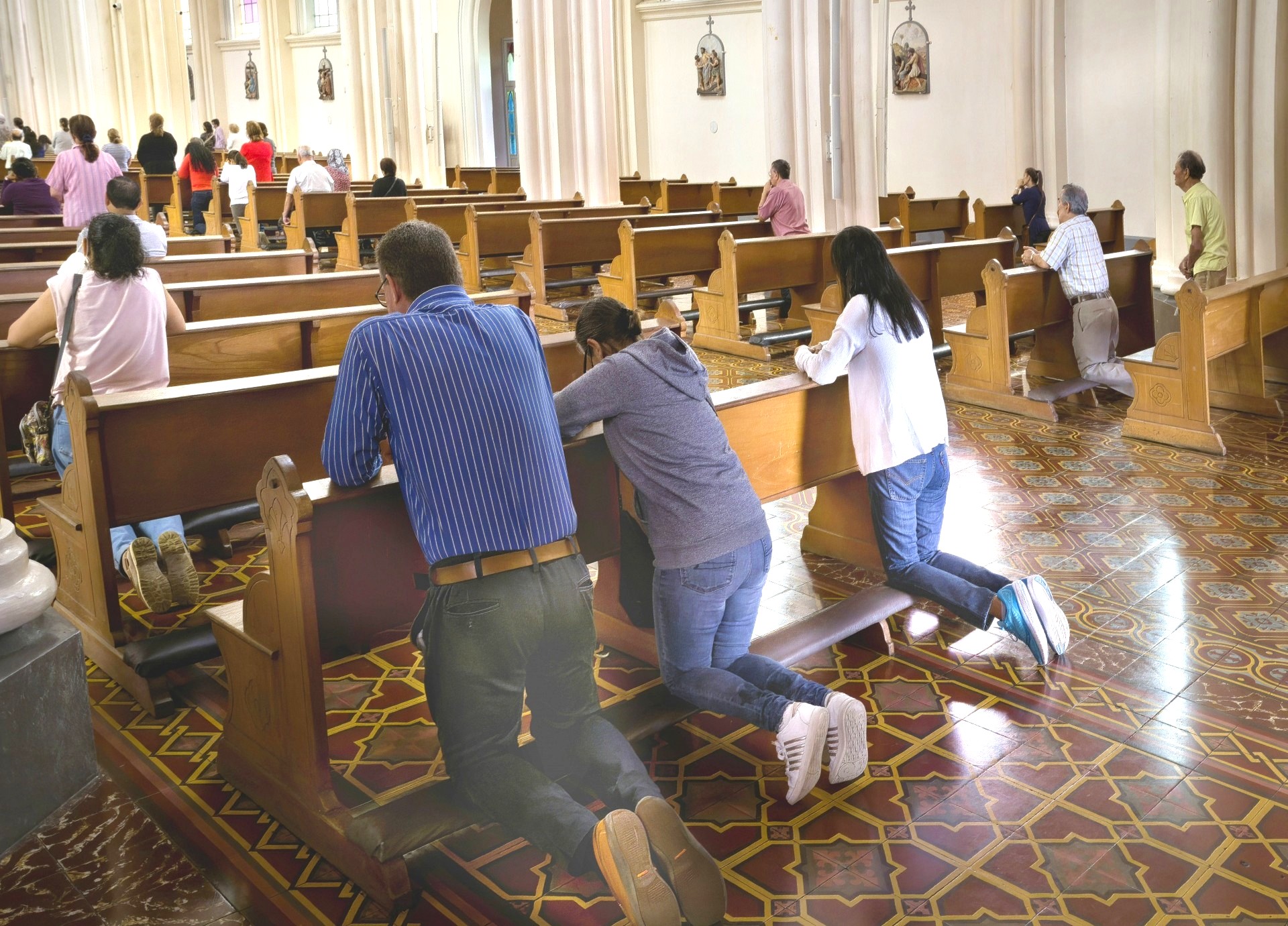 Imagine the following taking place in a prayer meeting. Someone who likes to give appealing prophetic words reads a passage from Isaiah at some length. The wonderful promises are read as for those present, but when the person comes to the troubled times ahead that are a part of the same passage and conditions on the blessing to Israel, the person pauses and says, “That bit is for Israel of course and not for us”.
How many times does this sort of thing happen in our Church prayer meetings today? This forms part of a concerning pattern.
One of the Old Testament promises most claimed by believers in the UK has been that of 2 Chronicles 7:14, particularly when praying for our nation.
And there is no doubt whatsoever that believers in Britain need to be praying for the nation – and indeed, for the world. Yet, what is our expectation?
If My People …
“If My people who are called by My name will humble themselves, and pray and seek My face, and turn from their wicked ways, then I will hear from heaven, and will forgive their sin and heal their land” (2 Chronicles 7:14)
One of the Old Testament promises most claimed by believers in the UK has been that of 2 Chronicles 7:14.
It was a wonderful promise to Israel. However, let’s consider the logic if we are to take this as a promise as Christians in prayer for our own land:
-
My people – Christians.
-
Christians called to seek God’s face and consecrate themselves in repentance.
-
God will hear and our land will come once more under the favour of God, as He sends healing to the land.Sometimes another idea is added, that Christians can repent for the nation – what is called identificational repentance.All this can be very well meant and as some lead, others follow, without questioning the reality of the expectations.
The instant I speak …
Contrast, however, 2 Chronicles 7:14 with the much lesser quoted Bible verse, Jeremiah 18:7-10:
“The instant I speak concerning a nation and concerning a kingdom, to pluck up, to pull down, and to destroy it, if that nation against whom I have spoken turns from its evil, I will relent of the disaster that I thought to bring upon it. And the instant I speak concerning a nation and concerning a kingdom, to build and to plant it, if it does evil in My sight so that it does not obey My voice, then I will relent concerning the good with which I said I would benefit it.”
This is what God showed Jeremiah at the Potter’s House. It might seem very similar to 2 Chronicles 7:14 on a superficial reading, but let’s consider the difference.
We should read the entire account of this wonderful moment in Israel’s history before extracting and personalising one wonderful verse.
The promise of 2 Chronicles 7:14 was given specifically to Solomon when the Temple was dedicated and when Solomon prayed for his nation, Israel. We should read the entire account of this wonderful moment in Israel’s history before extracting and personalising one wonderful verse. Nowhere in the Bible is there any suggestion that Solomon was also praying for another nation, such as Britain, or that God included any other nation in His promise to Solomon.
Claiming promises meant for Israel
A mistake is often made among some Christians that the promises for Israel are now to be taken directly for the Christian Church – but where is the justification for that? Believers in the Gentile world are grafted into the community of faith of believers from Israel. They are not grafted into the physical nation itself, but the historic body who know Jesus (Yeshua) as Messiah (Romans 11). Even if we were grafted into the nation of Israel (both believers in Jesus the Messiah and unbelievers – that is all the people of the land), the direct promise of 2 Chronicles 7:14 would still be for the nation of Israel, not any other nation. This is implied, in the circumstance it was prayed, by the following:
“Moreover, concerning a foreigner, who is not of Your people Israel, but has come from a far country for the sake of Your great name and Your mighty hand and Your outstretched arm, when they come and pray in this temple; then hear from heaven Your dwelling place, and do according to all for which the foreigner calls to You” (2 Chronicles 6:32-33).
The My people of 2 Chronicles 7:14 is the entire nation of Israel, a nation that has had times of exile from their land just as was anticipated through the prayer of Solomon:
“Or if Your people Israel are defeated before an enemy because they have sinned against You, and return and confess Your name, and pray and make supplication before You in this temple, then hear from heaven and forgive the sin of Your people Israel, and bring them back to the land which You gave to them and their fathers” (2 Chronicles 6:24-25).
A mistake is often made among some Christians that the promises for Israel are now to be taken directly for the Christian Church.
God later shows how Gentiles can be called ‘My people’ (Rom 9:23-24), in regard to those who put their trust in Christ. But the current verse, and Solomon’s prayer which preceded it, was about “Your people Israel”.
If we read the entire account of Solomon’s prayer and God’s answer, we see that it was a promise for them at any time when Israel had fallen away from fellowship with God. When they came, as a nation, to their senses in prayerful repentance, God would forgive and redeem them. It is a big question as to how this applies to physical Israel in the world today, but that is not the purpose of this particular article. My point is that 2 Chronicles 7:14 does not apply directly to Christians in a Gentile land.
Where Gentile believers can take encouragement and challenge from God’s promises and dealings with Israel, is in what these promises teach us about God. They show us His heart for mercy, but also for holiness, his desire for true repentance for all who have turned away from Him and His ways. They indicate how He may act towards both those who love him, and those who disobey Him. Indeed, showing the Gentile nations who God is was a key part of Israel’s mandate to be a ‘light to the Gentiles’.
However, there is not much to encourage us for our nation as a whole in a similar way to Israel. Salvation in the New Covenant is personal and individual, and the community of God’s Covenant people is built up through the process of individual salvation. We may at times stray within our particular Christian fellowship, and certainly we are to be conscious that corporate repentance may be needed, but that is not repentance for our nation.
Where Gentile believers can take encouragement and challenge from God’s promises and dealings with Israel, is in what these promises teach us about God.
Repentance through identification?
This brings us to the issue of repentance through identification, which is also flawed. Though we can confess the sins of the nation, repentance is a personal and/or corporate turning back to God, not something we can do for someone else.
This is why Jeremiah 18:7-10 is different from 2 Chronicles 7:14. It is the only place in the Scriptures where “any nation” is mentioned in this way. For Jeremiah, it was an indirect reference, because at the time he was in the Potter’s House, he was being given understanding concerning his own people, Israel, via this comparison with other nations. Nevertheless, we have the truth of what God said to Jeremiah to help us understand what is required of any nation:
The nation as a whole must come to God in repentance.
The nation needs to repent
We are at a critical time in the world and in our nation and we must face reality in our call and commitment to prayer. We are not going to wash away the gross sins of our generation at national level by thinking it only depends on our meeting together as believers in committed prayer. For our nation to come fully under the blessings of Almighty God, we must see a recommitment to the ways of God in every area of our nation’s life. We must see all the ungodly laws reversed for a start.
Britain as a nation once upheld the truths of the Bible and the ways of God sufficiently for the blessings that are so evident in past times, but we have fallen greatly and cannot rely either on the momentum of past blessings or on superficial expectations of the Church.
We are at a critical time in the world and in our nation and we must face reality in our call and commitment to prayer.
We do know that our God is slow to anger and abounding in mercy, which in Jesus triumphs over judgement, but it is time for a reality check and a right understanding of prophecy and the prophetic Scriptures, if we are going to play our part in turning the nation.
The time is quickening and the signs speak of a soon return of Jesus. There is a great reality to consider in our world, according to the end time prophecies of Ezekiel, Daniel and Revelation, expounded too by Jesus in Matthew 24, Mark 13 and Luke 21. There is expected to be a falling away from God in all Gentile nations, and a great shaking across those nations as well, before the Lord’s return.
Prayerful meditation on Jeremiah 18:7-10, within the world context of today, would indeed initiate a deep call to prayer, but also the need for outward prophetic and evangelistic ministry which calls the leaders of the nation to repentance, beginning with a return to God through the practical means of law and government.
(image c/o www.publicdomainpictures.net)
Dr Clifford Denton, 27/03/2026