Issachar People Logo


Antisemitism in the Church 


Learning from the Jew-hating practices of Emperor Constantine
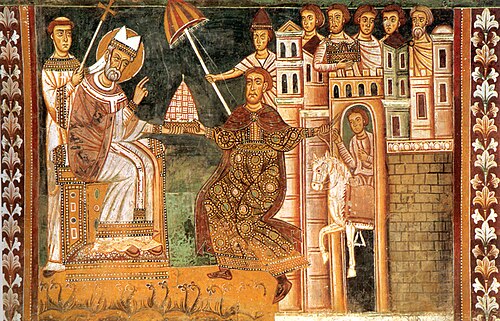
ConstantineMost Christians would not have been surprised to note that the man accused of stabbing Jews in London this week was born in Somalia.

Antisemitism from within

Many of us would be relieved to know that he was not British, so we can maintain our belief that Brits are nice to Jews. Some of us are content to blame all these foreigners coming into our country for the high level of anti-Semitism that is now coming to light – although the media in general goes out of its way to avoid any connection between Jew-hatred and Islam – despite it being contained in the teaching of the Qur’an, and having been prevalent throughout the history of that religion. The rest of us are quite happy to blame anyone for anti-Semitism: but certainly not ourselves!

Sadly, the truth is that the real culprit is the Church! Through our version of ‘Christianity’ we have moulded the culture of the British nation for centuries. All the churches of different denominations are guilty of gross anti-Semitism because it is built into the Christianity that we teach the clergy in our seminaries; certainly, I can testify that it was part of Church history that I was taught as an undergraduate as part of my training to preach the gospel!

Emperor’s Edicts

Anti-Semitism has been an integral part of Western Christianity since the Council of Nicaea in 325 A.D. Two edicts were passed at the end of the Council that were direct attacks upon Jews. They were formed by the Emperor Constantine (reigned 306–337 A.D.) who, through a trusted advisor, presided over the Council. He was determined to sever all connection between Christianity and Judaism because of his personal hatred of the Jews. Constantine framed Jews as a "detestable" and "depraved" people, primarily due to their rejection of Christ and the assertion that they were responsible for his death.

All the churches of different denominations are guilty of gross anti-Semitism because it is built into the Christianity that we teach the clergy in our seminaries ...

The Messianic Jewish faith of ‘The Way’ that the Jewish Messiah and His Jewish followers started was officially buried some 300 years after Pentecost, and the new religion of ‘Gentile Christianity’ arose. That new religion, which I refer to as the ‘Apostate Church of Western Christianity’, with its institutionalised anti-Semitism and its denial of its own historical and theological roots, was set to dominate the history and culture of Western nations for centuries to come.

The Dating of Easter

The dating of the crucifixion and resurrection of Jesus had always presented difficulties for Christians who wanted to honour the death and resurrection of Jesus that was at the heart of their faith. They knew that it took place at the time of Passover that began on the 14th of Nisan, but that was a movable feast that had to be determined each year by the rabbis who studied the phases of the moon.

Constantine, however, did not want to have any link with the Jewish authorities, whom he said, “have impiously defiled their hands with enormous sin, and are, therefore, deservedly afflicted with blindness of soul ... Let us then have nothing in common with the detestable Jewish crowd; for we have received from our Saviour a different way."

The emperor clearly overlooked the obvious fact that Jesus was a Jew. In his hatred of the Jewish people, he wanted to sever Christianity entirely from Judaism. He succeeded in gaining the support of a majority of the bishops at Nicaea who agreed to issue two statements:

Statement One

“First of all, it seemed most unworthy that in celebrating this most holy festival (The Crucifixion and Resurrection) we should follow the practice of the Jews, who have emphatically defiled their hands with enormous sin and are, therefore, deservedly afflicted with spiritual blindness. Since we have put aside their way of calculating the date of the festival, we can ensure that future generations can celebrate this observance at the more accurate time which we have kept from that first day when the passion occurred until the present time. Let us then have nothing in common with that detestable mass of Jews.”

In his hatred of the Jewish people, he wanted to sever Christianity entirely from Judaism.


Statement Two

“Let us with one accord adopt this course, and withdraw ourselves from that detestable association.  For it is truly most absurd for them to boast that we are incapable of rightly observing these things without their instruction. For how should they be capable of forming a sound judgement, who, since their parricides are guilty in slaying their Lord, lost their senses, and are led not by any rational motive, but by ungoverned passion, and they are swayed by an uncontrollable impulsiveness from the mad spirit that is in them? …Why then should we follow those who are in serious error?”

Following the Council, Constantine wrote a letter to all the bishops and leaders of the Christian churches who had been unable to attend the Council. He read this to the Council before sending it so that it had behind it the full authority of the bishops.

The letter that Constantine read to the Council, addressed to those Bishops who were not present was:

"It was declared improper to follow the custom of the Jews in the celebration of this holy festival, because their hands having been stained with crime, the minds of these wretched men are necessarily blinded. ... Let us, then, have nothing in common with the Jews, who are our adversaries. ... Let us ... studiously avoid all contact with that evil way. ... For how can they entertain right views on any point who, after having compassed the death of the Lord, being out of their minds, are guided not by sound reason, but by an unrestrained passion, wherever their innate madness carries them. ... lest your pure minds should appear to share in the customs of a people so utterly depraved. ... Therefore, this irregularity must be corrected, in order that we may no more have anything in common with those parricides and murderers of our Lord."

The direction of Christianity away from its biblical foundations was established at Nicaea and confirmed at subsequent meetings. At the Council of Antioch in 345 A.D., Christians were banned from celebrating the Passover Seder (ritual meal) with Jewish friends or neighbours. Then at the Council of Laodicea in 363–4 AD, the biblical Sabbath day was outlawed in the following regulation:

“Christians must not Judaize by resting on the Sabbath, but must work on that day, rather honouring the Lord’s Day; and, if they can, resting then as Christians. But if any shall be found to be Judaizers, let them be cursed from Christ.”  (Canon 29)

It was Luther’s teaching that undoubtedly formed a theological basis for the Nazi persecution of Jews and the murder of six million in the gas chambers.

By this time, all things Jewish were regarded as totally incompatible with Christianity. The new religion of ‘Western Gentile Christianity’ arose from the ashes of the discarded feasts, burnt in the flames of anti-Semitic hatred of the Jewish people that now became institutionalised in the Christian faith. 

Luther’s legacy

This hatred of Jews was reaffirmed and reinforced by the teaching of Martin Luther centuries later, during the Reformation. Luther’s infamous publication in 1543 of ‘The Jews and Their Lies’ was a milestone in anti-Semitism and violence against Jewish people. He urged the German princes and nobles to drive Jews out of their provinces in order that “We may all be free of this insufferable devilish burden – the Jews.” He was using the same language as that of the Emperor Constantine at Nicaea more than a thousand years earlier. It was Luther’s teaching that undoubtedly formed a theological basis for the Nazi persecution of Jews and the murder of six million in the gas chambers.

Western Christianity has much need of coming weeping before the Lord – renouncing the teaching of the Council of Nicaea in 325 A.D. and begging forgiveness from our brothers and sisters – the Jews. If we have any doubts on this subject we should ask ourselves the theological question: ‘Why did God choose the Jews to be the people among whom He would send his Incarnate Son?’

Cultural shift

In reports of the stabbings in Golders Green London this week there have been calls for a change of culture in Britain rather than simply increasing security - Metropolitan Police Commissioner Sir Mark Rowley highlighting that the responsibility for tackling antisemitism extends beyond the police, implying a need for a broader societal or cultural shift.

I believe the churches should lead such a change of culture by reaffirming the biblical teaching on the central importance of the people of Israel in the purposes of God; and the unity of Jew and Gentile in the teaching and practice of the Early Church in the first three centuries of church history which reflected the teaching of Jesus.

(image -  Emperor Constantine and Pope Sylvester)
 

Rev Dr Clifford Hill (MA. BD. PhD), 01/05/2026
Feedback:
John Shipton (Guest) 03/05/2026 02:02
The response towards anti Semitism and the Jews in the area my family lives has been luke warm. Local churches consider it to be as not that important. While the hard left fringe blame the nation of Israel and continue to fly Palestinian flags at demonstrations. The Green Party has shown their true colours in what they think of the Jewish state of Israel which is offensive and again about Zionism. And yet, many folk and young adults are being targeted to vote for the Green Party at the coming local UK elections. I do not like the attitude being given towards Jewish people by the churches who preach the false teaching of Replacement theology which has taken root, together with the plaza attitude towards the Middle East war as it does not concern them. For it is becoming that folk who call themselves religious is revealing how coolly unconcerned or indifferent their behaviour which is manifesting itself under the banner of established church systems - just like what happened in Nazi Germany ignoring God's chosen people, the Jews The result being 6 million Jews that were exterminated from the face of the earth during World War Two, and now militant Islam, wishes to see the destruction of Israel - God forbid!
Michael Petek 02/05/2026 20:34
Let us consider a possible explanation for why the Jews rejected Christ when He came to them, though they will recognise Him when called a second time. It could be a repercussion of an event that occurred in the time of Moses.

We read in Numbers 14 that the Israelites refused God's summons to enter the land of Canaan. God tested Moses with a proposal that suggested replacement: "I will strike them down with a plague and destroy them, but I will make you into a nation greater and stronger than they.”

Moses interceded before the Lord, reminding Him of His mercy and long-sufferingness. The Lord relented but insisted on punishing the people with forty years' wandering in the desert - His care, protection, and provision for the Israelites during this time - even as they were under His displeasure - are commemorated in the feast of Sukkot. We Christians don't have an analogous festival, but perhaps we will after the nation of Israel as a whole has recognised Christ.

Perhaps the historic anti-Judaism of Christians was somehow an expression of God's displeasure against the Jews for having rejected Christ, set aside in our time as a sign that their punishment is over.
Peter Morrow (Guest) 02/05/2026 19:17
Quite clearly the Church acting with the State did some good, and the examples you give are such. But given that the Church acting as institution has also been guilty of much itself (the most recent examples being the prevalence of abuse in the Church), you present too easy and too whitewashed a history.

Can the Church and State educate a nation in the ways of Christianity and can they (it, as an establishment) form the values of a nation, of course, in the way that any religion or moral and political philosophy can, and that’s the problem.

The Gospel concerns an actual supernatural rebirth, a recreating of the person, it makes a person alive to Christ, and I’m afraid that mere ‘Christian values’ while welcome do not do that.

And it is why Christian nations are susceptible to the decline of the kind we have seen since the cultural revolution of the 1960’s when Christianity all but collapsed as the driving force of the nation’s heart, surviving only in the ceremonies, as the nation tipped its hat to a form of godliness but rejected the power thereof.

But we’re way beyond even that now, and what is needed is a change of heart empowered by the Holy Spirit, only that will result in real practical change.

The West has rejected Christendom and it could do so because the seeds of the Gospel were sown amongst the shallow ground and thorns of politics, nationality, secularism and earthly power.

Perhaps some day the nation will look Christian again, perhaps some day it will seek and promote Christian values, and perhaps that society will benefit, temporally, but even if that were to happen it can only happen when people are born, not of the flesh but from above.

There is a pressing need for the Church to repent of its antisemitism, and a wider need for the Church to repent if just about every other ‘ism’ it has embraced and honour Christ.

If the nation is to change, it must begin in the Church. In short, the problem is ‘us’, not ‘them’.
Michael Petek 02/05/2026 13:09
Of course there were problems with the Church as it deals with the civil authorities as a res publica in its own right. That's a hazard that a nation undertakes when it recognises Jesus Christ as Lord of governments and laws and deals with the Church as the teacher of truth. Are we to hold that the risks of these problems outweigh the benefits and blessings to society in the suppression of pagan sacrifices, abortion, infanticide, and sexual immorality, all of which were dealt with either by the Code of Theodosius AD 311-437 or by the Code of Justinian AD 534?
Peter Morrow (Guest) 02/05/2026 09:49
Michael, I agree, it wasn't all down to Constantine, but the direction of travel in those years, led, I believe, to untold problems for the Church; problems summarised in both the article and subsequent comments here.

And it’s important that the contemporary Church reflects on where we have been. I’ve already referred to antisemitism in parts of the Protestant American Church (they’re equally anti Catholic, which I am not), and this is one cause for concern amongst many in a world in which the Church has been ‘At ease in Zion’ for too long, and in which we have compromised ourselves with the world morally, politically, and financially.

We need to face these facts. This article helps us to do that. No denomination has a monopoly on righteousness or on heresy, and honestly about the failing and wrong turns of our own traditions is essential, otherwise when trouble come, we will collapse completely.
Michael Petek 02/05/2026 07:11
Peter Morrow - Constantine didn't make Christianity the state religion. Theodosius did that for the Roman Empire decades later. Armenia, Ethiopia and Georgia had already adopted Christianity as the state religion by the time Constantine became Emperor. It's what happens when a nation decides to be discipled by Christ in its public affairs.

Christ has not given governments permission to sin.
Lorraine (Guest) 01/05/2026 22:40
Absolutely correct, the true Church IS called "The Way", and that's the Church that i am going to associate myself to/with. "THE WAY", "GOD" (JESUS CHRIST) WANTS HIS CHURCH BACK, THE TRUE CHURCH! WELL DONE FOR THIS ARTICLE EXCELLENT, MY THOUGHTS EXACTLY. LOVE AND BLESSINGS TO YOU ALL.
Peter Morrow (Guest) 01/05/2026 21:55
The question is not whether Constantine and the events of legalised Christianity and state religion did some good, they did, the question is, ‘at what cost’.

Where doctrinal controversies clarified, yes; did Christian values and morals influence society, yes; was Christ’s divinity affirmed, yes; did the great persecution end, yes, all good things on the face of it, but…
‘Christian values are not the Gospel; whether we like it or not there is little or no nominalism under persecution; and because there was (in various denominations) an alliance between Church and State, the Church was influenced by the world. To be born into a nation state and christened by the Church Christianised a person and Christianised a nation, hence the continuing notion that a nation can be Christian whether there is personal faith or not.

The real problem here, as well as the problems so eloquently described in the article, is that the root of Constanstinian Christianity continues to bear bad fruit in the myth of a Christian nation.

But faith, real faith, comes by the Word of God and the Holy Spirit; Christians life under the Cross, not seeking the glory of an earthly crown.

Yes, Constantine brought persecution to an end… and when he did, our troubles really began: a compromised Church; a nominal State Christianity; and a worldly Church
Very often it is the case that persecution produces growth, but when it looks like the world, it is weak.

Under Constantine the Church became, to use a modern phrase, ‘politically correct’ and popular; but that age, whether it produced good fruit or not, is gone. We are witnessing the end of Christianity as popular cause and marker of national identity - it’s over - and the great mistake the ‘Bible-believing’ ‘remnant’ will make, is to seek a restoration of national Christianity, Christian nationalism, especially through or by way of the ‘corridors of power’; because it will end where Constantine began, in, amongst other things, an antisemitism of the type that can already be seen in some wings of the American reformed Church.
Michael Petek 01/05/2026 19:02
Tom Lennie, the only edicts we have record of that had the force of law concerning the Jews are found in the Theodosian Code 16.8, which you can access on the Internet. Judaism remained a lawful religion throughout this period and Jews were not persecuted, certainly not by the imperial authorities. The Theodosian Code prescribed the death penalty only for the violent persecution of converts from Judaism to Christianity. But it also gave legal privileges to Jewish leaders comparable to those accorded to Christian bishops. There's a good reason, too, why the Church prohibited Christians from participating in the Jewish Passover: it is that God delivered only the Israelites from captivity in Egypt - but not the Gentiles.
Tom Lennie 01/05/2026 14:27
Michael.
You can also find on the internet many references to Constantine's Jew hatred and his influence on the Council of Nicaea to distance the Church from connections to Judaism. Constantine viewed Jews as a "detestable" group, referring to them in state documents as a "bestial" or "abominable" sect. He also forbade Jews from converting to Christianity. He encouraged the Council of Nicaea to distance the Church from what he described as the "detestable company of the Jews" and the "murderers of our Lord". Following the Council, letters from Constantine and decisions by bishops actively promoted a hostile view of Jews, framing them as a "blinded" and "depraved" people.
Michael Petek 01/05/2026 14:02
You can easily find the acts of the Council of Nicea on the Internet. There's a Profession of Faith, followed by 18 canons, and finally a Letter to the Egyptians standardising the date for the celebration of Easter and abolishing its celebration on 14 Nisan - which had been limited to the Johannine churches of Asia Minor. What you won't find is any anti-Judaic edict of Emperor Constantine. His piece of imperial rhetoric was only read to the Council and was never voted on or approved by the bishops.

And no, the Church didn't "embrace Constantine". This Emperor, who outlived the Council by 12 years, merely removed - by the Edict of Milan - the persecution of the Church that Diocletian had unleashed. It wasn't until the end of the century that Theodosius issued the Edict of Thessanonika, establishing Christianity as the religion of the Empire. The intervening period saw the proliferation of the Arian crisis, which ended with the Triumph of Orthodoxy in which Athanasius was the central figure.
Peter Morrow (Guest) 30/04/2026 22:27
This is an excellent and necessary article, for not only has the Church through history embraced various forms of negativity towards the Jewish people, from supersessionism to outright opposition, this has had theological and political consequences.

When the Church embraced Constantine, it embraced the temporal powers, exchanging the Cross and the Gospel for Caesar and earthly glory, and things have never been the same since.

The alliance with Caesar was the root of all sorts of heresy, including, antisemitism, state religion, the Cross as a symbol of political power, and institutionalism. When the Church sought to advance the Gospel via Caesar’s throne room it made an enemy of God’s ancient people and enforced conversions at the point of a sword.

When the Church marries Caesar, in whichever generation, in whichever nation, there are consequences - always have been, always will be.

The Cross does not need Caesar, the Cross defies Caesar and his ways, and the resurrection confirmed God’s new creation: one new man: Jew and Gentile: a new humanity: one nation under God.
Glenys
Hello and welcome to Issachar People, the re-imagining of Issachar Ministries, Prophecy Today and partner ministry New Beginnings Discipleship.
Contact us.

Welcome to our Website

Contact Us

If you would like to get in touch with us please use the details below.

Contact Details:
Phone: 0333 090 2187
Email:admin@issacharpeople.org

Office Address:
Issachar People
Bedford Heights
Brickhill Drive
Bedford
MK41 7PH


Contact Form
Please fill in this form and it will be sent to us. (*Mandatory Fields)

*Your Name:
Email Address:
Telephone: