Tolerant Arminianism – At What Cost?
Many people have been fascinated by the beautiful utopian pictures of everyday life in the Dutch town of Delft in the seventeenth century, as painted by Johannes Vermeer (1632-75).
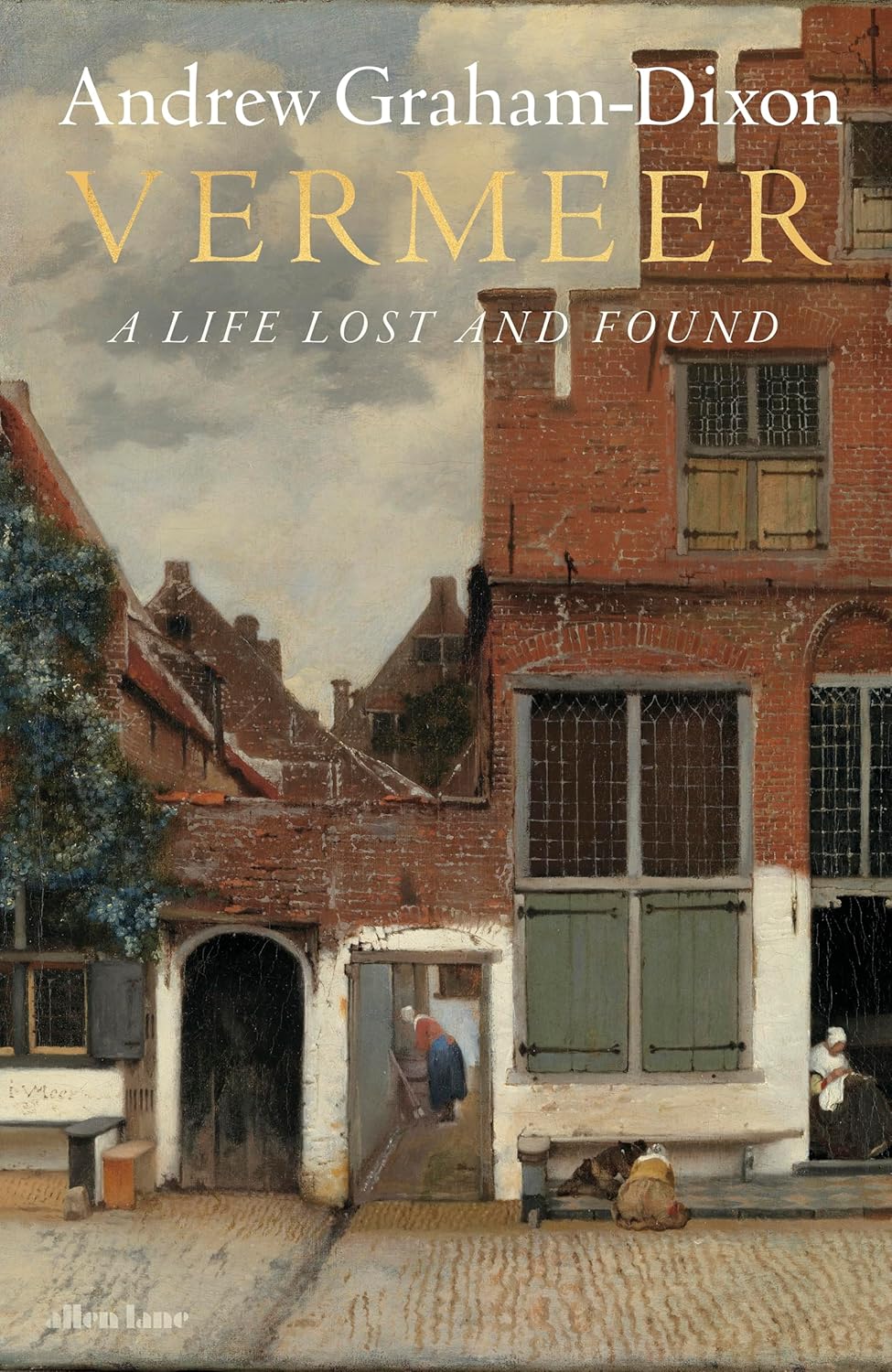 Until recently, however, no one knew anything much about this outstanding artist. But Andrew Graham-Dixon’s research has now revealed Vermeer’s connection with a movement of the Holy Spirit amongst fellow followers of Dutch Reformed theologian, Jacobus Arminius - albeit a movement somewhat beleaguered by excessive tolerance.
‘Vermeer: A Life Lost and Found’ (Allen Lane Publishing, 2025) is worthy of particular consideration because divisions between Roman Catholics, Calvinists and Arminians still simmer under a mutually tolerant Christian surface, even after four hundred years. And ‘tolerance’ – that much- vaunted modern quality based in the logical sociological reasoning of fallen human nature on being nice, politically correct, ‘kind’ or ‘woke,’ and trusting to habits of religion instead of waiting on God in the name of Jesus and heeding the profundity of His words in Scripture - is having the effect of weakening Christianity in these increasingly dangerous times.
Life of Arminius
Arminius (1560-1609) had been a professor of theology in the nearby University of Leiden. His mother, father, brothers, sisters and cousins had been 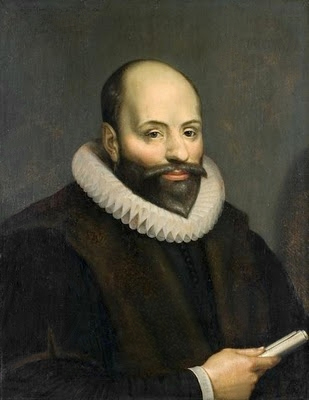 slaughtered by soldiers of the Spanish Inquisition whilst he was away studying as a young man. Despite 80 years of horrendously brutal war against Northern Protestants, Arminius nevertheless preached tolerance and the riches of God’s grace. And he took issue with some of the hardline theological doctrine that had evolved from Jean Calvin (1509-64) and from Calvin’s successor, Theodore Beza (1519-1605).
There was a truce in 1609, and although Jesuits continued to operate incognito to uphold the papal religion, Calvinists held the political power in the Netherlands, using their dogma to determine who were the elect of God, and who, therefore, they reckoned they could trust in the face of danger. After the Synod of Dort (1618-19), followers of Arminius were expelled from the Reformed Church and began meeting together privately without clergy in house groups for mutual encouragement, prayer and Bible reading. Provided they kept a low profile, both Arminians and Catholics were tolerated.
Divisions between Roman Catholics, Calvinists and Arminians still simmer under a mutually tolerant Christian surface, even after four hundred years.
Secular arguments
Vermeer 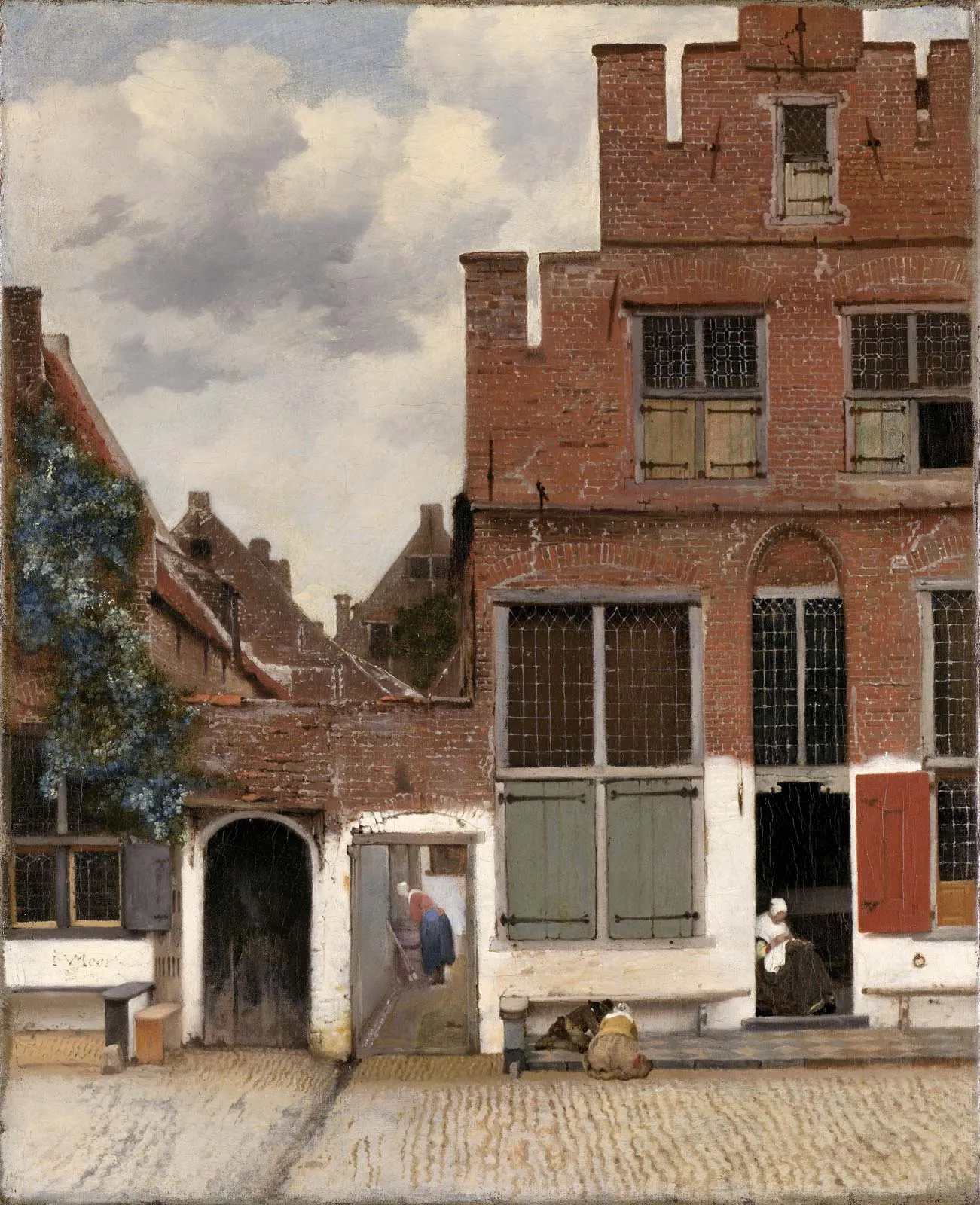 depicted people he knew living ordinary, loving, tolerant lives and worshipping God in music and song, in what appears to be a virtual millennial kingdom. His pictures adorned a room where a house-church met in the big townhouse - pictured on the book’s cover with a grape vine growing up the outside, on the extreme left. The building half-hidden behind it - the one with the sloping roof on the left side of the centre middle-distance – was where larger groups of Arminians met together. It was approached down an alleyway accessed through the black door on the centre-left of the picture, and it is still in existence.
Believing “Christ died for all” (2 Cor. 5:15) and “God is love” (1 John 4:16), the Arminians tolerated anyone apparently wanting to grow closer to God. Even the Jewish philosopher Spinoza (1632-77) was among them, although Spinoza denied the divinity of Jesus. In fact, with John Locke and others, Spinoza powerfully influenced Enlightenment endeavours to bring peace and prosperity to Europe through secular arguments for toleration.
Excessive tolerance
 Yet a spirit of excessive tolerance will always fail to distinguish between the righteous and the wicked, between the one who serves God and the one who does not serve Him (Mal 3:18). And today it has become logically obvious that the opposing spiritual powers of Judeo-Christianity and Islamism, and of Judeo-Christianity and Communism, cannot ultimately be resolved simply by toleration. Hoping to avoid war, we can defend ourselves as politely as possible without excessive toleration.
God told the people of Israel to keep the Sabbaths and the Jubilees (Lev 25). And to have kept those instructions could conceivably have curbed the temptation to worship foreign gods. Progressively tolerant human nature can be seen to have resulted over the centuries in a lack of sober judgement in every nation on earth, leading to exploitation, excessive borrowing, deceptions and dissensions which continue to this day.
Narrow way
Perhaps Christians can see that such troubles could be avoided by proper respect for the redemptive victory over fallen human nature won by Jesus Christ, only begotten Son of the Creator of the universe, through the agony of His crucifixion and His glorious resurrection. Casting our issues on Him in repentance, and thankfully accepting His redeeming sacrifice for our sin, can keep us in the narrow way (Isaiah 53:4-6, Matt 7:14, 1 Peter 5:6-11).
Progressively tolerant human nature can be seen to have resulted over the centuries in a lack of sober judgement in every nation on earth...
Paul tells us, ”In Him we have redemption through His blood, the forgiveness of sins, in accordance with the riches of God’s grace that He lavished on us with all wisdom and understanding.” (Eph 1:7-8.) John writes, “If we walk in the light, as He is in the light, we have fellowship with one another and the blood of Jesus, His Son, purifies us from all sin.” (1 John 1:7.)
Dealing with human nature
Clear heart-felt thanks for our redemption and salvation evokes divine authority powerful enough to hold true Christians together, regardless of denomination, and to exclude the enemy. The Holy Spirit will enable us prayerfully to receive God’s guidance and to overcome what confronts us, knowing that Almighty God gave all authority in heaven and earth to our Lord and Saviour Jesus Christ (Matt 28:18). Nevertheless, we must accept that we shall not have lasting peace on earth until the enemy is subdued when Jesus soon returns to reign with His saints.
In 1672 the advance of the army of Louis X1V of France,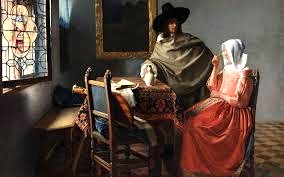 in a trade war, suddenly made it obvious to the Dutch that the millennial Kingdom had not yet arrived. A mob, furious that their leaders’ negotiations for peace and toleration had failed to protect them from a renewal of hostilities, mercilessly slaughtered Johan de Witt, Grand Pensionary of Holland. The French invasion was only stopped when the people of Holland opened the sluices to allow sea water to cover their land. The sodden cold that ensued was probably responsible for the sudden death of Vermeer, aged 43, leaving eleven children and a wife he had dearly loved.
In recognition of how murderous our enemies can be, it is probably necessary now to be better at dealing with evil and with fallen human nature than the Dutch Arminians were. So, can Christian worship be advertised any longer as “All Welcome”? The powerhouse must be full of those of us who are truly thankful for continually being cleansed from our sin by the blood of Jesus, and who continue to sort out our lives truthfully with Holy Spirit (Phil 2 12). Then, as described in Acts 2, others will join us.
'Vermeer, a life lost and found' by Andrew Graham-Dixon was published by Allen Lane in 2025 for £30.
Dr John Gordon, 29/05/2026