Where is the Outrage?
The Silence Around Britain’s Rape Gang Scandal Is Becoming Its Own Scandal
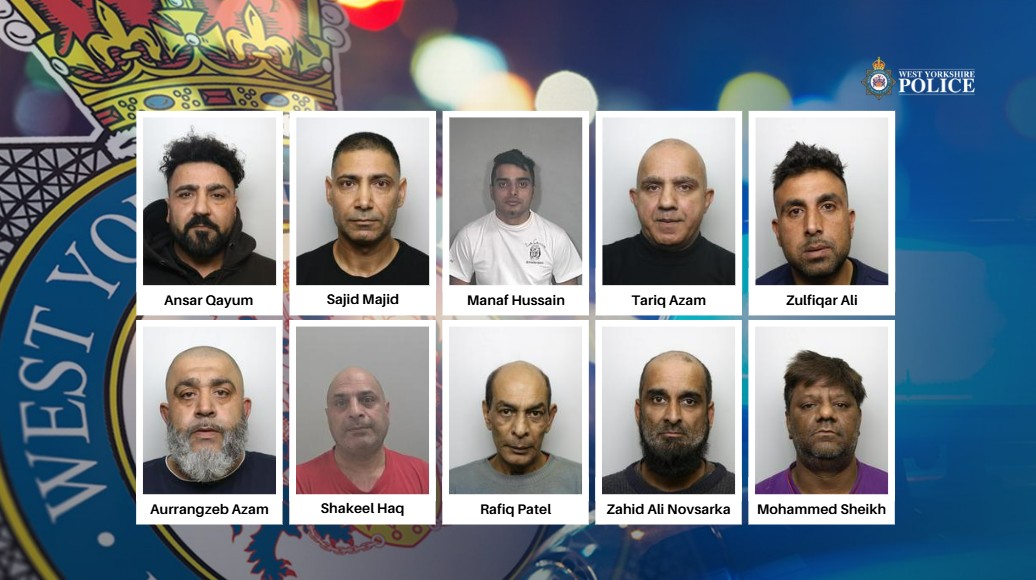 The most revealing thing about the recent grooming gang convictions in Dewsbury and Batley was not simply the horror of the crimes themselves, it was the silence that followed them. Nineteen men, overwhelmingly of Pakistani Muslim background, alongside a white female facilitator, were sentenced after the systematic rape and abuse of vulnerable young girls, including one as young as twelve. Collectively, they received 277 years in prison. These were not isolated offences, not misunderstandings, not “relationships”, but organised predation carried out over years against children failed repeatedly by the adults and institutions supposedly tasked with protecting them. Yet the national response was muted, cautious, almost embarrassed.
One might reasonably have expected outrage from political leaders. One might have expected urgent statements from local Members of Parliament. One might have expected prominent moral voices demanding accountability not only from the perpetrators, but from the police, councils, social services, and political culture that allowed these crimes to continue for decades across multiple towns in Britain.
Instead: near silence.
Institutional Failure
The constituency at the centre of this latest scandal, Kim Leadbeater’s neighbouring political landscape around Batley and Dewsbury, has once again become associated with one of the darkest failures of modern British public life. Yet while Leadbeater has become nationally prominent through her sponsorship of the assisted dying bill, positioning herself as a moral voice on questions of life, dignity, and compassion, many local people cannot help noticing the extraordinary imbalance in political urgency.
Westminster appears capable of mobilising immense emotional and legislative energy around the right to die, while often struggling to speak clearly about the industrial-scale abuse of vulnerable working-class girls that unfolded for years under the noses of state institutions.
That contrast matters.
It matters because the grooming gang scandal was never merely about individual criminals. It was about systemic cowardice. It was about police forces terrified of accusations of racism. It was about local authorities prioritising “community cohesion” over child protection. It was about social workers ignoring obvious warning signs. It was about political parties, especially in heavily contested northern constituencies, fearing electoral consequences if difficult truths were spoken openly.
It was about political parties, especially in heavily contested northern constituencies, fearing electoral consequences if difficult truths were spoken openly.
And the public knows it. That is why trust continues collapsing.
After nearly three years of reporting restrictions, West Yorkshire Police finally announced the convictions with the usual institutional self-congratulation. Yet even now, the details reaching the public remain sanitised, fragmented, and delayed. The offences themselves date back as far as the mid-1990s and early 2000s. Trials ran between 2023 and 2024. Sentencing concluded in 2025. Only now is fuller reporting emerging.
Ordinary people naturally ask the obvious question: why did it take this long?
Authorities insist reporting restrictions protected judicial integrity. Sometimes that is true and necessary. But after decades of minimisation, euphemism, and institutional defensiveness surrounding grooming gangs, many Britons no longer instinctively trust official explanations. That trust has been squandered by years of half-truths, delayed disclosures, and selective transparency.
Even more disturbing is how routine these stories have become.
Twenty convicted rapists receiving nearly three centuries of combined prison time should dominate national headlines. Instead, coverage appears buried, cautious, or fleeting. This follows earlier major operations in the same region, including Operation Tourway in 2022, which jailed 25 offenders for a combined 346 years. Before that came countless smaller cases, scattered convictions, and repeated revelations stretching back across towns such as Rotherham, Rochdale, Telford, Oxford, Newcastle, and beyond.
At what point does a pattern become impossible to deny?
At what point does silence itself become complicity?
Corporate Paralysis and Moral Collapse
Because this scandal was never hidden from the authorities in the way people sometimes imagine. Teachers knew. Social workers knew. Police officers knew. Local journalists often knew. Victims and families certainly knew. The issue was not lack of information. The issue was institutional paralysis produced by fear.
Fear of racial tension; Fear of political backlash; Fear of upsetting carefully constructed narratives about multicultural harmony; Fear of losing votes.
And so vulnerable girls, overwhelmingly white and working class, became politically disposable. That is the truth Britain still struggles to say aloud.
From a Christian perspective, this failure represents not merely administrative incompetence but moral collapse. Scripture repeatedly warns that societies are judged by how they treat the vulnerable: Speak up for those who cannot speak for themselves Proverbs 31:8.
Scripture repeatedly warns that societies are judged by how they treat the vulnerable.
Instead, Britain unashamedly abandoned them.
Worse still, public discourse surrounding these crimes remains trapped between two dishonest extremes. One side seeks to suppress ethnic and cultural dimensions entirely for fear of inflaming division. The other exploits the suffering of victims merely to fuel hatred toward all Muslims indiscriminately. Both responses fail morally.
Truth matters. Patterns matter. Cultural dynamics matter. The refusal to examine why disproportionate numbers of offenders emerged from particular subcultures was one of the reasons these crimes continued unchecked for so long. But collective racial hatred is neither truthful nor just either. Entire communities cannot be condemned for the crimes of predators.
What must be confronted instead is the deadly alliance between criminality and cowardice: predators willing to exploit vulnerable children, and institutions too frightened to stop them.
The official inquiry process does little to reassure the public. Years pass, committees assemble, terms of reference multiply, reports are commissioned, carefully managed language emerges. Meanwhile confidence drains away almost entirely.
Incomplete Public Narratives
Many Britons increasingly suspect that inquiries function less as instruments of accountability and more as mechanisms for containing outrage until public attention moves elsewhere. The comparison with other institutional failures is unavoidable. During the Covid years, public trust in government transparency suffered catastrophic damage. Now the same scepticism surrounds grooming gang investigations. People no longer assume official narratives are complete. Too many previous assurances proved false and still deeper questions linger unanswered.
If major operations are only now fully exposing offences committed up to 2012, what happened after 2012? Are authorities genuinely confident these networks disappeared? Or have some offenders simply remained unidentified while victims stayed silent out of trauma, fear, addiction, shame, or distrust? No honest person can answer confidently.
This uncertainty alone should shame our nation.
Perhaps most disturbing of all is the inversion of moral energy now visible in British politics. Parliament debates assisted dying with intense seriousness, emotional testimony, and appeals to compassion and autonomy. Yet when it comes to the long-term abuse of vulnerable girls by organised gangs, political language suddenly becomes hesitant, managerial, procedural. Children brutalised for years receive less passionate public advocacy than abstract legislative ethics.
Again, people notice this.
The issue is not whether assisted dying deserves ethical scrutiny; of course it does. The issue is the extraordinary asymmetry of urgency. Britain’s political class often appears more comfortable discussing the right to end life than confronting the systematic destruction of innocence already allowed under its watch. And this is where the media bears enormous responsibility.
Large sections of Britain’s press spent years minimising these scandals or treating anyone raising concerns as inherently suspect. Journalists feared accusations of racism more than they feared failing vulnerable children. Some still do. But reality eventually breaks through euphemism.
A society cannot survive indefinitely once ordinary people conclude that truth itself is being managed.
The public can see patterns. They can see institutional reluctance. They can see selective outrage, and every time the media softens language, buries stories, or avoids difficult truths, trust erodes further.
A society cannot survive indefinitely once ordinary people conclude that truth itself is being managed.
The Greatest Moral Disgrace
The tragedy is that none of this should ever have become politically tribal. Child protection should transcend ideology entirely. Yet Britain allowed identity politics, electoral calculations, bureaucratic self-preservation, and fear-driven policing to override the most basic civilisational duty: protecting children from organised abuse.
The result is one of the greatest moral disgraces in modern British history.
Even now, despite hundreds of convictions nationwide, many people instinctively feel that justice remains partial at best. Because prison sentences alone cannot repair what was broken. Not while institutions avoid full accountability. Not while officials retire comfortably without consequence. Not while political silence persists. Not while entire communities still feel afraid to speak openly.
The recent silence was deafening because silence is precisely what enabled this scandal for so many years in the first place. Until Britain finds the courage to confront the truth honestly, without euphemism, without cowardice, and without political calculation this wound will remain open.
Nick Thompson, 05/06/2026