When the Scarlet Wool Would Not Turn White (Part 2)
The modern sign is what God allows us to lose
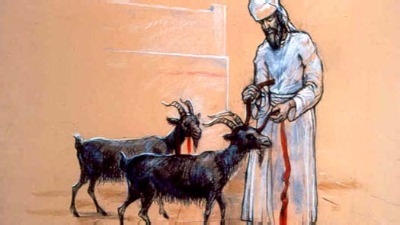 In When the Scarlet Wool Would Not Turn White (Part 1), Nick Thompson asked what the events of Rosh Hashanah (the Jewish New Year) and Yamim Nora’im (the ten Days of Awe) leading to Yom Kippur, might teach the Church today. In this concluding article, the author considers the theme further.
This is where the Yom Kippur tradition becomes particularly challenging. What if the greatest warning is not something God adds, but something He removes? Romans 1 - which I am a week into with the daily studies notes that I produce - describes a terrifying progression in which God repeatedly gives people over to the consequences of their rebellion. I find that a judgement of a particularly sobering kind. God does not always need to send fire from heaven; sometimes He can simply remove the restraint. Sometimes a culture can get what it insists upon. Sometimes a Church can become what it repeatedly chooses to become, and sometimes the absence of God's evident blessing becomes itself a warning.
That should cause us to stop a moment and reconsider our idea of success. A large congregation does not necessarily signal God's approval. Neither is a wealthy ministry necessarily evidence of God's approval. Nor a politically influential Church or a viral Christian message. Jesus' words to His church in Laodicea are devastating precisely because the church believed it was rich, successful and self-sufficient. However, Jesus saw something entirely different: “You are wretched, pitiable, poor, blind, and naked” (Revelation 3:17). What was the only remedy? Repentance.
God does not always need to send fire from heaven; sometimes He can simply remove the restraint.
Our Western lamp
The rabbinic tradition records another sign. The western lamp of the menorah ceased to burn continually during the same forty-year period. Whether we regard this as historical memory, theological interpretation, miracle tradition, or some combination of the three, the symbolism is extraordinary. The light was failing and the witness was diminishing - all of which meant the Temple was approaching destruction. Revelation takes the imagery of lampstands and places it in the context of the churches and that should cause us to ask if the light of the Western Church is still burning? After all, Jesus said: “You are the light of the world” (Matt 5:14). That is a far better question than whether or not Christianity is culturally influential or has political power, or whether Christian institutions are prosperous. Our question really should be: Does the Church still shine with the character of Jesus? Light does not exist for itself, but so that others can see.
Britain and the Western Church
This question becomes particularly uncomfortable when applied to Britain and Western Europe. For centuries, Christian assumptions shaped our laws, language, architecture, calendar, charity, education and understanding of human dignity. Yet much of that inheritance now survives culturally while its theological foundation is increasingly rejected. Yes, we still use Christian vocabulary, still celebrate Christmas, still bury our dead in churchyards, still swear oaths on the Bible and we still speak of forgiveness, dignity, compassion and equality.
But increasingly we attempt to retain the fruits while cutting down the tree. That is not merely a political problem, but a spiritual one. Perhaps the question for Christians is not; Why has Britain rejected Christianity? That apportions blame elsewhere. A better question is; What has the Church failed to communicate about Christ?
Have we preached Christ, or have we preached Christianity? Have we invited people to repentance, or merely invited them to join our community? Have we demonstrated holiness, or simply demanded moral conformity? Have we shown the mercy of God? Have we demonstrated the truth of God? Have we loved our neighbour? Have we cared for the stranger? Have we defended the vulnerable? Have we lived as people who genuinely believe that Jesus is King?
There is something deeply healthy about setting aside time to ask; Lord, where have we drifted?
The Days of Awe, Yamim Nora’im, do not invite us to begin with the nation. They invite us to begin with ourselves.
The Church needs its own Day of Atonement
There is something deeply healthy about setting aside time to ask; Lord, where have we drifted? That’s not asking where someone else has drifted, or why our government or society has gone astray. It is the idea of taking accountability and asking where we have drifted?
David understood this: “Search me, O God, and know my heart! Try me and know my thoughts! See if there be any grievous way in me and lead me in the way everlasting! (Ps 139:23-24). That, right there, is the spirit of the Days of Awe: it is also profoundly Christian.
But the crimson does become white
There is one final and glorious difference. A Christian does not approach Yom Kippur wondering whether God will accept the sacrifice. Rather, we look back to Calvary where the sacrifice has already been offered. Hebrews declares: “He entered once for all into the holy places, not by means of the blood of goats and calves but by means of his own blood, thus securing an eternal redemption.” (Heb 9:12).
That changes everything. We are not trying to make the crimson thread turn white. Jesus has already accomplished what the sign represented. Our sins can be washed, our guilt can be forgiven, our consciences can be cleansed and our relationship with God can be restored. The Day of Atonement, therefore, does not ultimately point Christians towards fear, but towards the sufficiency of Christ. But precisely because Christ's sacrifice is sufficient, we have no excuse for deliberately walking away from Him. Grace is not permission to remain unchanged; it is the power to return.
Grace is not permission to remain unchanged; it is the power to return.
Let us draw near
I think this is where the Days of Awe speak most powerfully to Christians. The High Priest entered the Holy of Holies once each year while the people remained outside. The veil represented separation, but when Jesus died the veil was torn. The writer of Hebrews draws this astonishing conclusion: “Therefore, brothers, since we have confidence to enter the holy places by the blood of Jesus… let us draw near with a true heart in full assurance of faith (Heb 10:19,22. The answer to the fear of judgement is not denial, nor religious performance, or political power. Neither is it prophecy charts or finding the next crimson thread. The answer, purely and simply, is Jesus.
So, where are the signs today?
Here are three questions I would suggest we should be asking: -
1. What is God showing us?
Are there things happening around us that should cause Christians to wake up? Not because we can confidently label them prophetic fulfilments, but because they expose the consequences of abandoning biblical wisdom.
2. What is God removing?
Are there areas in which the Church has assumed that God's blessing is guaranteed? Are we discovering that influence, cultural privilege and institutional authority can disappear? If so, perhaps the appropriate response is not outrage, but repentance.
3. What is God asking us to restore?
Our answer may be surprisingly simple:
-
Prayer; Scripture; Holiness; Generosity; Hospitality; Truth; Mercy; Evangelism; Courage; Reconciliation; Love ….
-
And above all Jesus.
We do not need a crimson thread hanging outside the Temple to tell us that something is wrong.
Do not wait for the crimson thread
Brothers and sisters, there is a danger in becoming fascinated by signs. We might wait for God to do something spectacular while ignoring what He has already said. The ancient Israelites had prophets. The generation of Jesus had the Messiah. The early Church had the apostles. We have the completed Scriptures, the Holy Spirit and the testimony of Jesus. We do not need a crimson thread hanging outside the Temple to tell us that something is wrong.
The question is whether we will listen when God speaks through Scripture. Paul tells Timothy: “All Scripture is breathed out by God and profitable for teaching, for reproof, for correction, and for training in righteousness (2 Tim 3:16). There are important words here; reproof and correction. We search for and respond to Scripture that encourages us. But Scripture is also intended to confront us. Sometimes the greatest mercy God can give us is a warning.
The Days of Awe are therefore an invitation
Perhaps the great Christian lesson of the Yamim Nora’im is that God's warnings are mercies and that the purpose of a warning is not destruction, but repentance.
Nineveh received a warning and repented. Judah received warnings and repeatedly refused them. Jerusalem received its ultimate warning in the ministry of Jesus, and the Church today has been given its own warnings in Revelation.
-
To Ephesus: Remember. Repent. Return.
-
To Pergamum: Repent.
-
To Thyatira: Repent.
-
To Sardis: Wake up.
-
To Laodicea: Be zealous and repent.
The most important question is ... whether we are still sensitive enough to recognise the ordinary signs that we are drifting?
The pattern is unmistakable. God warns because He wants His people to return and that brings us back to the crimson thread. The most important question is not whether God is giving us modern miraculous signs, but whether we are still sensitive enough to recognise the ordinary signs that we are drifting?
Signs like when prayer becomes difficult, when sin becomes comfortable, when Scripture becomes negotiable, when holiness becomes embarrassing, when repentance becomes unnecessary, when political identity becomes more important than Christian identity, when loving our enemies becomes impossible, when the poor become invisible, when the stranger becomes unwelcome, when the Church becomes more concerned with defending itself than proclaiming Christ and when the lamp still looks impressive from the outside but the flame has become small. Those should be signs enough.
The crimson thread and the Cross
The ancient tradition says that the crimson thread once turned white and the people rejoiced. Then came a generation in which it did not and forty years later, the Temple was destroyed. For us believers, there is a deeper mystery. The crimson does not need to turn white every year because the Lamb has already shed His blood once for all. Isaiah's promise has found its fulfilment in Him: “Though your sins are like scarlet, they shall be as white as snow.” The blood of Jesus does what the Temple sign could only portray.
-
The sinner can be cleansed.
-
The prodigal can return.
-
The guilty can be forgiven.
-
The Church can repent.
-
The lamp can burn again.
-
The sleeping can wake.
-
The fallen can rise.
-
And the King still calls His people home.
This is the real message of the Days of Awe; not frightening people about approaching judgement, but an invitation to return while the door is still open.
The most appropriate prayer I can suggest ... is simply the ancient prayer of David: “Create in me a clean heart, O God and renew a right spirit within me”
Jesus’ invitation stands: “Behold, I stand at the door and knock” (Rev 3:20). In our generation, this is the sign we most need to see; not a crimson thread, not an eclipse, not a political event and not a mysterious phenomenon in the heavens. Rather, the Holy Spirit quietly saying: Come home, repent, return; the King is near.
Because of Jesus, because of the Lamb that was slain, because of the Lion of Judah, when we do come, we do not do so trembling before an uncertain throne; we come boldly before the throne of grace. “Let us then with confidence draw near to the throne of grace, that we may receive mercy and find grace to help in time of need.” (Heb 4:16).
The Days of Awe, I contend, leave us with both a warning and a promise.
The warning: Do not presume upon God's patience.
The promise: His mercy is still calling.
The most appropriate prayer I can suggest, in this season of Yom Kippur, is simply the ancient prayer of David: “Create in me a clean heart, O God and renew a right spirit within me” (Ps 51:10).
For a Christian, that is not an attempt to earn atonement; it is the response of someone who has discovered that atonement has already been made.
That their crimson has become white and that the Lamb has come.
Nick Thompson, 21/09/2026