Prison Paradise!
A POW finds ‘freedom’ in a New Zealand camp
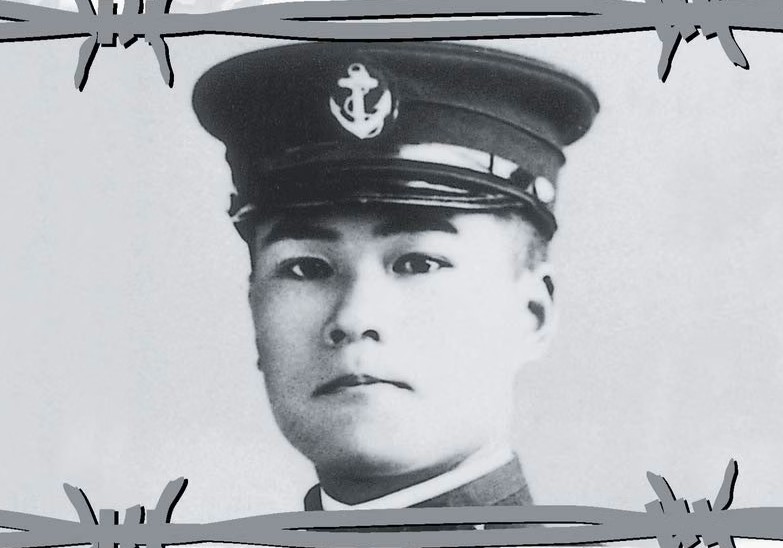 When a Japanese sailor’s destroyer was sunk by the Americans in a World War II South Pacific battle, most of his companions drowned.
War and kindness
Amazingly, even though he was sucked underneath the waves with others as the ship went down, torpedo officer Michiharu Shinya somehow survived this 1942 disaster (only 18 of the 200-strong crew did).
But he would rather have died at that point as his people had been indoctrinated to believe that it was shameful to be captured. Nevertheless, he was badly wounded but nursed back to health by medics.
In time, he was picked up and eventually taken to a Prisoner-of-War camp at Featherston, near Wellington, in New Zealand, where he was to spend the next three years, as Don Stephens records in his inspirational book War and Grace (Evangelical Press, an imprint of 10Publishing) - a fascinating insight into the influence of the gospel on the lives of people who lived through the World Wars of the last century and the events that led up to it.
Shinya and his fellow inmates were treated with much kindness (in sharp contrast to the torture often experienced by Allied prisoners at the hands of the Japanese). Being showered with gifts at Christmas, a feast he knew nothing about, seemed especially strange
Those who hope in the Lord will renew their strength. They shall soar on wings like eagles; they will run and not grow weary; they will walk and not be faint.
However, he was determined not to be ‘taken in’ by the Christian teaching offered after some of the prisoners requested spiritual help and a Japanese Bible was made available.
Complete freedom
That is until he chanced upon an article entitled ‘Sorrow in Victory’ in which the author quoted a ‘Hebrew prophet’ as saying: “Those who hope in the Lord will renew their strength. They shall soar on wings like eagles; they will run and not grow weary; they will walk and not be faint.”
It made a deep impression on him, and he was determined to find out where it came from. Assuming it was from the Old Testament, he began reading the Bible, starting at Genesis chapter 1. It was only eventually that he discovered, to his great joy, that the profound words were from the Book of the prophet Isaiah (chapter 40, verse 31).
Meantime, after flagging somewhat in his search, he found himself hospitalised with malaria, at which time a friend brought him a booklet called ‘The Reason Why’, explaining the way to salvation.
It so happened that the camp’s chaplain, Pastor Hessell Troughton, had been a missionary to Japan and spoke the language. Shinya joined others in his Bible studies and came to know and love Jesus as his Saviour. So much did this “complete freedom” now rule his life that prison had morphed into what he described as “a unique paradise on earth”.
So much did this “complete freedom” now rule his life that prison had morphed into what he described as “a unique paradise on earth”.
He never looked back after that and became convinced that his post-war calling would be in service of his Lord.
Deep grace
When he finally returned home, his family were shocked to see him alive for he had been reported as killed in action. He had also given a false name to his captors because of the supposed shame of falling into enemy hands.
Shinya subsequently became a pastor, and a prolific writer and translator following years of theological study both in Tokyo and the US. The Old Testament, he came to believe, demonstrated that sin is “the ultimate problem of mankind” and clearly pointed to Christ as the answer.
On seeking to understand why so few Japanese became Christians, he felt it was partly due to their pride borne of believing they were a superior race.
As for those three Christmases Shinya spent in New Zealand, author Don Stephens writes: “Of all the gifts he received, the one he valued most was ‘the boundless and deep grace and peace of God in the Lord Jesus Christ’.”
Charles Gardner
Charles Gardner, 12/11/2026