Israel, Hamas and Accusations of Genocide
Establishing the facts of the matter
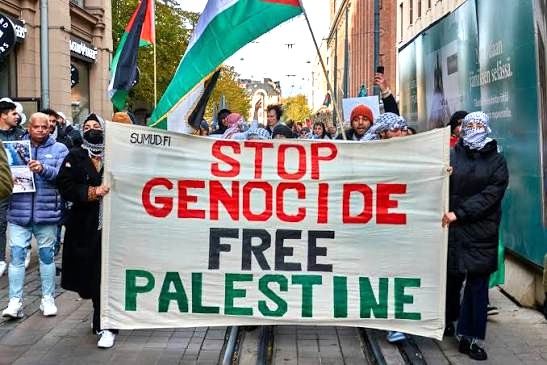 ‘Genocide’ is the term thrown around by Israel-opposers everywhere; it is also expressed with deep concern by many who might otherwise be more inclined to be favourable to the world’s only Jewish state. But is this charge really valid?
The accusations of Israeli genocide in Gaza have their principal roots in a United Nations report of 2025: “Gaza Genocide: a collective crime”, submitted by the Special Rapporteur regarding human rights in the Palestinian territories occupied since 1967. However, there are many reasons to question it.
War-related statistics
First, let us look at definition. The term ‘genocide’ was first coined by a Polish-Jewish lawyer, Raphael Lemkin, in 1944, based on both the systematic destruction and mass killing of approximately 600,000 to 1.5 million ethnic Armenians by the Ottoman Empire between 1915 and 1917, and the extermination of 6 million Jews during the Nazi Holocaust.1 The term applied specifically to racial, not regional cases. The current International Court of Justice definition is looser, defining genocide as any of five “acts committed with intent to destroy, in whole or in part, a national, ethnic, racial or religious group”, with those acts including killing, but also harming, or inflicting living conditions that would destroy the group.
According to the World Health Organisation – which relies on figures produced by the Gaza Ministry of Health – following the sudden barbaric attack by Hamas in October 2023, Gazan war-related deaths are estimated at about 75,000 (with 176,900 people injured). This seems like a lot of deaths – and it certainly is. Yet, this is out of a population of some 2.1 million, during a period of active war.
Moreover, many of those deaths were not the result of deliberate targeting, as was the case with the separate genocides of Armenians and Jews. Actually, the Gazan deaths and injuries include the militants of Hamas and Palestinian Islamic Justice, plus those civilians encouraged in support of the official militants, and those deliberately used as human shields. Others were not targeted, but caught in the bombing, despite efforts to limit civilian casualties. The data supplied by Gaza’s Ministry of Health is dramatically understating fatalities among adult males, the demographic most likely to be combatants. This substantially undercuts the persistent claim that 72 percent of those killed in Gaza are women and children as noted by a Washington Institute report in January.
The use of human shields
The UN’s accusation of genocide shows no consideration for Hamas’ tactics of using civilians as human shields, a method that inevitably increases the civilian death toll, whilst also influencing Israel’s actions. According to the Henry Jackson Society, “Since 7 October 2023, the UN has issued 367 reports that are filed under the subject of ‘Gaza Strip’, in which it has rarely acknowledged and never asserted the use by Hamas of ‘human shields’. The phenomenon of ‘human shields’ has only been mentioned four times, in each case in only a single sentence, as either an “allegation”, an Israeli “claim” or an unverified “report” that this practice occurred. The UN has never dedicated a single paragraph, let alone an entire report, to analysing how Hamas has fought the war in Gaza.”2
Furthermore, the same source states that Hamas’s human shield strategy dates back to 2006, soon after Hamas took control of the Palestinian Legislative Council. After a rocket was fired at Israel from the residential home of Popular Resistance Committee member Mohammed Baroud, “local Hamas leader Nizar Rayan called on residents to crowd the rooftop of the building with the expectation that Israel would not strike the location of the rocket fire, given the presence of many civilians.” The strategy worked and the IDF called off the strike, despite an advance warning it gave to Baroud of an impending airstrike.
These attempts by the IDF to do all they can do avoid civilian casualties have continued through the recent war in Gaza, and right up to the present day, despite challenging circumstances.
Al Jazeera reported the incident, openly admitting to Hamas’s human shield strategy in the title of its article: “Palestinians form human shield: Hundreds of Palestinians form a human shield against Israeli airstrikes in the Gaza strip”. The article freely acknowledged that “Israel routinely orders residents out of their homes ahead of airstrikes on suspected weapons-storage facilities, saying it wants to avoid casualties.”3 (This is particularly significant as Al Jazeera broadcasts from an Arab-Muslim nation and frequently engages with Islamic and regional sociopolitical movements; it is widely viewed across the Arab and Muslim world as a primary voice for regional perspectives.) These attempts by the IDF to do all they can to avoid civilian casualties have continued through the recent war in Gaza, and right up to the present day, despite challenging circumstances.
A culture of death
It is crucial to recognise that the Islamic culture of death for the sake of Allah is a significant part of life in Gaza. The Arabic term ‘shahid’ is used by Palestinians to refer to any of their killed civilians or fighters, regardless of their religious affiliation, and regardless of whether or not their killing was the result of a targeted attack.4 As the Quran states, “Those who leave their homes in the cause of Allah, and are then slain or die. On them will Allah bestow verily a goodly Provision, …. verily He will admit them to a place with which they shall be well pleased: for Allah is All-Knowing, Most Forbearing.” (22:58-59).
The Islamic culture of death for the sake of Allah is a significant part of life in Gaza.
Moreover, during the Al Aqsa Intifada of 2000-05, martyrdom evolved beyond its religious connotations, becoming an ideal for the resistance identity of secular Palestinian nationalists.5 This culture extends even to the children of Gaza being exploited as weapons of war: Pictures abound of Palestinian babies dressed as suicide bombers and brandishing arms. Ironically, there are Islamic texts that forbid deliberately seeking death, such as Sunnah an-Nasai, book 21, Hadith 1: “None of you should wish for death. Either he is a doer of good, so if he lives he will do more good or he is a doer of evil but perhaps he will give up his evil ways.”
Children's TV programs, many sponsored by the Palestinian Authority itself, preach jihad, advocate genocide against Jews and infidels, and glorify martyrdom. A young girl on a programme recently aired on Hamas TV was encouraged by the host to be in the police when she grew up so that she could “shoot Jews … all of them.” After years of being educated with incitement, Palestinian pre-teens are then pressed into service by ‘popular committees’ to engage in riots and violent confrontations with Israeli soldiers. Older children are sent to hurl firebombs and slingshot projectiles. Hamas, Islamic Jihad, and Fatah's Martyrs Brigades enlist teens to be suicide bombers and to commit other atrocities against Israeli civilians.6
A dense urban environment
Another aspect of the issue is the sheer urbanisation of Gaza. According to the IPCC, “Because of its small geographic footprint (approximately 365km2) and a population of roughly 2.23 million people, the entire region functioned essentially as a highly dense, contiguous urban corridor.”7 The very density of the warzone has inevitably led to a relatively high-seeming death toll, as it was incredibly difficult for Israel to target Hamas operatives without killing some civilians.
Sadly, this is further complicated by the tunnelling project of Hamas, a deliberate strategy of embedding its military in civilian infrastructure. The network was roughly estimated to be between a staggering 350 to 500 miles long, at depths between 65 and 200 feet, Many routes are reinforced with concrete and metal, equipped with electricity, ventilation, plumbing, and communication lines and as many as 5,700 access shafts, with some analysts placing the estimated cost at over one billion dollars, one project alone costing $90 million to build just three dozen tunnels in 2014.8 Just think of what improvements in civilian infrastructure that could have funded.
On February 12, 2024, the New York Times reported that classified Israeli intelligence documents suggested Hamas stored weapons and took cover at the Al-Shifa hospital, using tunnels 213 metres-long, twice the size previously known. These tunnels included bunkers, living areas, and computer and communications rooms, with established documents showing that Hamas masked its activities using the hospital.9
Are Palestinians targeted by Israel?
Gazans clearly identify themselves as Palestinian and so a strict application of ‘genocide’ could easily imply that Israel’s policy is to exterminate Palestinians. Nothing could be further from the truth. According to Wikipedia’s summary10, Palestinian Arabs form the largest ethnic minority in Israel, preferring to be identified as Palestinian citizens of Israel. According to the Israel Central Bureau of Statistics, in 2023, the Israeli Arab population stood at 2.1 million people, accounting for 21% of Israel's total population, with most of these citizens identifying themselves as Arab or Palestinian by nationality and as Israeli by citizenship. Moreover, examples of many high-ranking Palestinians in Israel include:
-
Khaled Kabub, the first Muslim Arab judge to serve on the Supreme Court of Israel
-
Salim Joubran, a Christian Arab who served as a permanent judge on the Supreme Court
-
Ghassan Alian, IDF Major General, the first non-Jewish commander of the Golani Brigade
-
Captain Ella, senior officer in the Arabic division of the IDF spokespersons
-
Yoseph Haddad, journalist and social media influencer
-
Toufik Mansour, mathematician and professor at Haifa University
Palestinian citizens of Israel have equal voting rights with Jews. There have been Arabs in Israel’s Knesset since 1949.
Also significant is the fact that Palestinian citizens of Israel have equal voting rights with Jews. There have been Arabs in Israel’s Knesset since 1949. In this year’s latest elections, hundreds of thousands voted in record numbers, giving two Arab-led parties their largest-ever number of seats in Israel’s parliament.11
Yemeni journalist speaks up for Israel
A brave Yemeni journalist stunned the United Nations last month with an account of how his view of Israel has dramatically changed following a visit there. Luai Ahmed was invited to address the assembly by UN Watch, a non-governmental organisation monitoring the international body’s performance, as the UN Human Rights Council gathered to debate racism. He said:
“I grew up in Yemen, where the word that we used for black people is ‘abeed’, which quite literally means ‘slaves’. Racism towards black people in my country is horrifying, but it’s not even the most toxic hatred that I was taught.
“The first time I ever heard the word ‘Jew’ was in my local mosque when I was nine years old. At the end of Friday prayers, the Imam said: ‘May Allah kill the Jews and the Zionists’. And I responded alongside thousands of Muslims praying beside me: ‘Ameen’.
“I was taught that Zionism meant killing Arabs, stealing our land, and destroying Islam. Then October 7th came. Hamas terrorists ‘freed Palestine’ by slaughtering 1,200 Israelis and kidnapping more than 200 people, including a one-year-old child.
“Almost everyone in my Arab-Muslim circle celebrated. I didn’t. Instead, as a journalist, I decided to visit the so-called Zionist entity, and I was completely shocked to the core by the lack of apartheid and racism that I experienced.
“One day, I got an eye infection. At the hospital, the nurses in reception were Jewish. The doctor treating me was Arab. Is there racism in Israel? Of course. There’s racism everywhere.
“But Arabs in Israel aren’t called ‘slaves’. They are doctors, engineers, and party leaders. My experience helped me realise that Zionism really just means the Jewish people’s right to a tiny country. Everything I was taught was a lie.”12
Everything I was taught was a lie.
From the River to the Sea
As for the political aspirations of many Palestinians, both at home and in the West, and their political supporters, the widespread slogan seen and heard in public demonstrations in our country is, “From the River to the Sea, Palestine will be free” (that is, from the River Jordan to the Mediterranean Sea). Some view the phrase as simply an aspirational call for freedom, human rights, self-determination and an end to decades of displacement. Others consider the slogan as antisemitic and, indeed, genocidal, arguing that it calls for the violent erasure of the State of Israel and the displacement or expulsion of its Jewish population – chillingly reminiscent of the Nazi ‘Judenrein’ (cleansed of Jews).
The battle for Israel’s survival continues, in line with God’s ancient promises, such as that given to Abraham: “I give to you and your descendants after you the land of Canaan as an everlasting covenant” (Gen 17:8). Perhaps most suitable for our own Gentile context is God’s word through Jeremiah, “Hear the word of the Lord, you nations, proclaim it in distant coastlands: ‘He who scattered Israel will gather them and will watch over his flock like a shepherd’” (Jer.31:10).
I have personally been a witness to some of that regathering in my own lifetime, one whose father served with the RAF in the late stage of the former British Mandate of Palestine, one who has prayed for the peace of Jerusalem since being the teenage secretary of the Young Friends of Israel, the junior branch of the Pentecostal Jewish Mission (‘Focus on Israel’ since 1987).
Its motto, David’s ancient exhortation in Psalm 122, still stands: “Pray for the peace of Jerusalem; may those who love you (Jerusalem) prosper, and peace be within her walls” (vv.6-7).
David Longworth
Footnotes
1. https://en.wikipedia.org/wiki/Genocide
2. https://henryjacksonsociety.org/publications/hamass-human-shield-strategy-in-gaza/
3. https://www.researchgate.net/publication/261991780_How_Arab_is_Al_Jazeera_English_Comparative_Study_of_Al_Jazeera_Arabic_and_Al-Jazeera_English_News_Channels
4. Abufarha, Nasser (2009). The making of a human bomb: an ethnography of Palestinian resistance. The cultures and practice of violence series. Duke University Press.
5. Saarnivaara, M. (2008-09-26). "Suicide Campaigns as a Strategic Choice: The Case of Hamas". Policing. 2 (4): 431.
6. https://www.un.org/unispal/document/auto-insert-181056/
7. International Peace and Cooperation Center, October 2024
8. https://mwi.westpoint.edu/israels-new-approach-to-tunnels-a-paradigm-shift-in-underground-warfare/
9. https://en.wikipedia.org/wiki/Alleged_military_use_of_al-Shifa_hospital
10. https://en.wikipedia.org/wiki/List_of_Arab_citizens_of_Israel
11. https://apnews.com/article/israel-palestinians-elections-arab-voters-d601dc14b4b3d4f183b6f747b1f5e7b7
12. “Everything I Was Taught About Israel Was a Lie” — Luai Ahmed Stuns the United Nations
(top image c/o https://commons.wikimedia.org/wiki/File:Stop_the_genocide,_Free_Palestine_023_Mielenosoitus_palestiinalaisten_tueksi_(53274234547).jpg)
David Longworth, 13/11/2026